

HISTORIC DESIGNATION
LESSON 2
GOAL: This lesson will provide a breakdown of historic designation, with particular focus on the National Register of Historic Places. It will address common questions about the effects of designation, eligibility guidelines, and how historic designation applies specifically to Asian and Pacific Islander American historic sites.
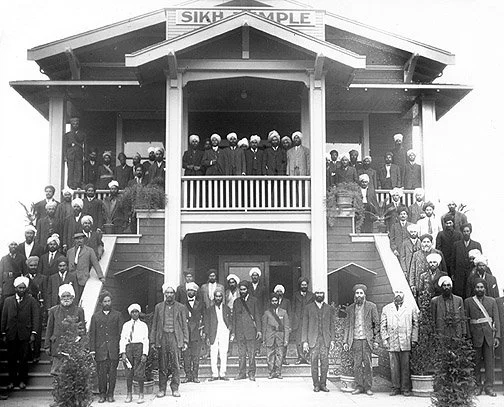
Stockton Gurdwara, CA
INTRODUCTION
One of the most common tools in preservation is historic designation: a legal designation that recognizes a property or group of properties as historic. Depending on the level of designation, there are different application requirements, benefits, and effects.
In the United States, there are three main levels of designation: national, state, and local. This lesson will focus primarily on the National Register of Historic Places, a widely used framework that often sets the template for state and local ones. Because state and local programs tend have differences between each region, the lesson will only cover some of the more common characteristics at these levels. For exact information, please consult with your specific city or state.
The National Register of Historic Places (often abbreviated to “the National Register” or “NRHP”) was created by the National Historic Preservation Act in 1966. It was and continues to be a principal tool to achieving historic preservation in the United States, by fulfilling one of the most foundational acts – identifying and documenting the histories of our historic places. As of 2025, the National Register has designated over 100,000 properties that represent roughly 2,000,000 historic resources.
National Register listings versus U.S. population, by percentage.
However, less than 1% of those sites are related to Asian and Pacific Islander American history, despite our communities making up roughly 8% of the U.S. population and having had a presence in the continental United States for over three hundred years and in the Pacific Islands for millennia. This underrepresentation on the National Register is shared among Black and African American, Latino, LGBTQ+, and Women’s histories too. Given this context, the act of historic designation can provide visibility to our historic places and communities and help tell the full story of the United States. Being listing on a historic register means that your community, the general public, and the government agree that a place is worth being preserved for present and future generations.
So, what does designation on the National Register actually do? There are a lot of misconceptions about historic designation.
National Register of Historic Places
NRHP designation can…
officially recognize the history of a site in public record
ensure a more careful review process in federal or federally funded projects that might affect the designated property (a.k.a. Section 106 Review)
provide access to the federal historic tax credit for rehabilitation projects
provide eligibility for other grants and financial support at the National, State, and local level – pending availability and competitiveness
NRHP designation does not…
does not place any restrictions on what a private property owner can do with their property, including demolition and sale
does not require maintenance of the property
does not open the property to the public
does not automatically provide any additional funding
State and Local Registers
The National Register has acted as the nation’s standard for cataloging historic resources since its inception. Because of that, state and local registers share a lot of similarities with it. While each state and local program has its own unique characteristics, there are a few key differences that tend to separate them from the National Register:
Governing Body: The first is that local and state designation is administered by different governmental bodies. While the National Register is administered by the National Park Service (NPS), each state register is administered by its own State Historic Preservation Office (SHPO). Since SHPOs are also the ones to directly review National Register nominations in their state before forwarding them to NPS for final approval, State and National Register designations are often (but not always) paired together. Each local register is maintained by the local government, most often by a dedicated historic preservation commission. Note that not all municipalities will have a historic preservation ordinance, and thus not have a local designation program either.
Designation Effects: Another difference is that local and state designation will often be tied to different regulations and financial incentives, such as a State Historic Tax Credit. Another example is a financial incentive like the California Mills Act, which provides property tax relief to properties listed on the National, California, or local register in certain cities.
Local Designation Protections: The last major difference is that local designation at the city level, unlike the National Register, tends to include some restrictions on maintenance, alterations, or demolition of the property. The strength of protection will depend on each city, with some offering tiered options. For example, the Indianapolis Historic Preservation Commission has both preservation districts, which require review of alterations, maintenance, and demolition, and conservation districts, which only review demolition.
Because each state and municipality will have their own preservation ordinances and laws, it’s difficult to cover each case in this lesson. To understand how local or state historic designation works in your community, try contacting your local historic preservation nonprofit or State Historic Preservation Office (SHPO) for specific information.
National, State, and local historic registers represent three different programs that have different eligibility requirements and effects. A property can be designated to one, two, or all three levels of designation. There is no standard order to designation, so you can determine your preservation strategy on a case-by-case basis.
EFFECTS OF DESIGNATION
WHAT: Once you understand the impact of designation, the next question is: what can be designated? The National Register identifies five distinct historic resource types:

Iolani Palace, Oahu, HI
Buildings are maybe the most common historic resource type and is broadly defined as being “created principally to shelter any form of human activity.”
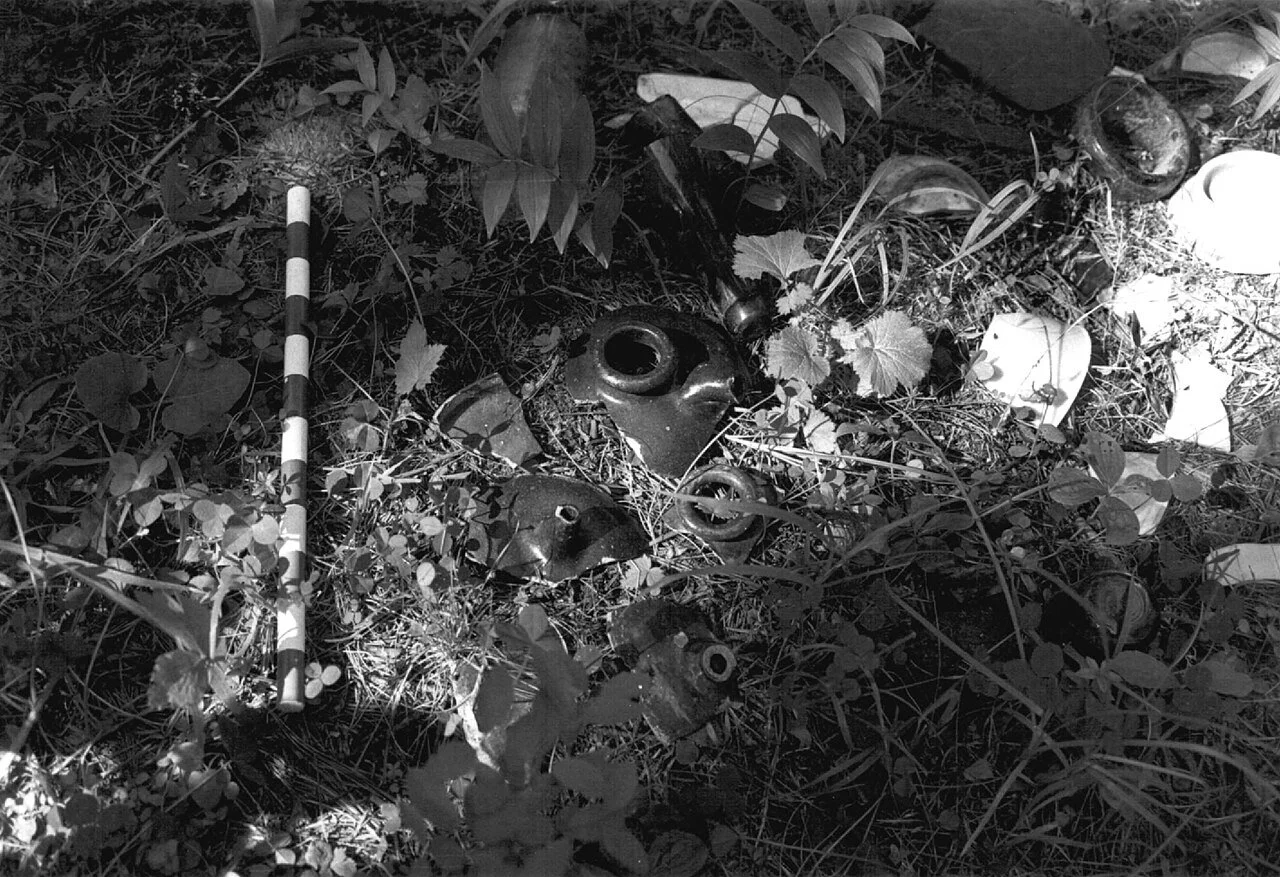
Moore Gulch, Pierce, ID
Sites are defined as locations where historic events or activities occurred. These can include burial or ceremonial grounds, historic landscapes, and ruins.
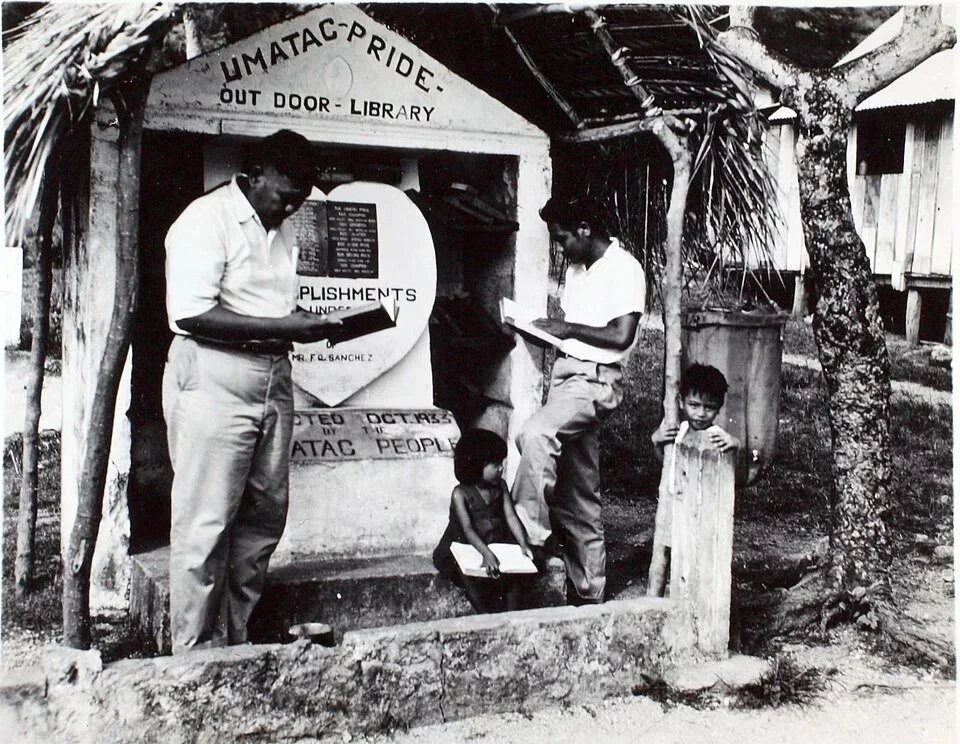
Humåtak Outdoor Library, Guam
Structures, in contrast to buildings, are identified as not principally created to shelter human activity. This includes things such as railroads, earthworks, or boats and ships.
Dragon Gate, San Francisco, CA
Little Tokyo, Los Angeles, CA
WHEN: How old does a historic resource need to be?
Specifically for the National Register, the general rule is 50 years or older. That being said, there is an exception for properties that have achieved significance within the past 50 years, and some state and local registers have language that allows resources as recent as 25 years. In Asian and Pacific Islander American communities, this is particularly important to note for more recent historic resources associated with recent immigrant communities. Either way, the “50 year rule” from the National Register can be treated as a guideline rather than an unbreakable rule. Whether a resource is 25 or 250 years old, age alone does not make a property eligible for designation.
Case Study: Far East Center State Historic Designation
WHY: The next is question you’ll need to answer is, “Why should it be designated?”
A historic resource eligible for designation should have what is known as “historic significance.” As the National Park Service has defined it, historic significance is “the importance of a property to the history, architecture, archeology, engineering, or culture of a community, State, or the nation.” To be listed on the National Register, it must hit at least one of four criteria:
Criterion B: Association with an important person
Puʻukoholā Heiau, Kawaihae, Hawai’i
A historic resource is eligible for Criterion A if it has a strong association with particular events, activities, or patterns throughout history. While this applies to singular events such as the 1907 Bellingham Riots, it can also include longer, distinct periods such as the Chinese Exclusion Act (1882-1943) or hieaus in Hawaii that acted as important places of religious worship.
Particularly in APIA communities, historic resources may be best known for their cultural significance, but not strongly associated with any notable events, people, architectural merit, or information potential. In some state and local designation programs, an explicit criterion has been made for cultural significance. At the national level, recent guidance has emphasized that properties with cultural significance should be eligible under Criterion A as well.
Criterion C: Distinctive characteristics of design, construction, or form

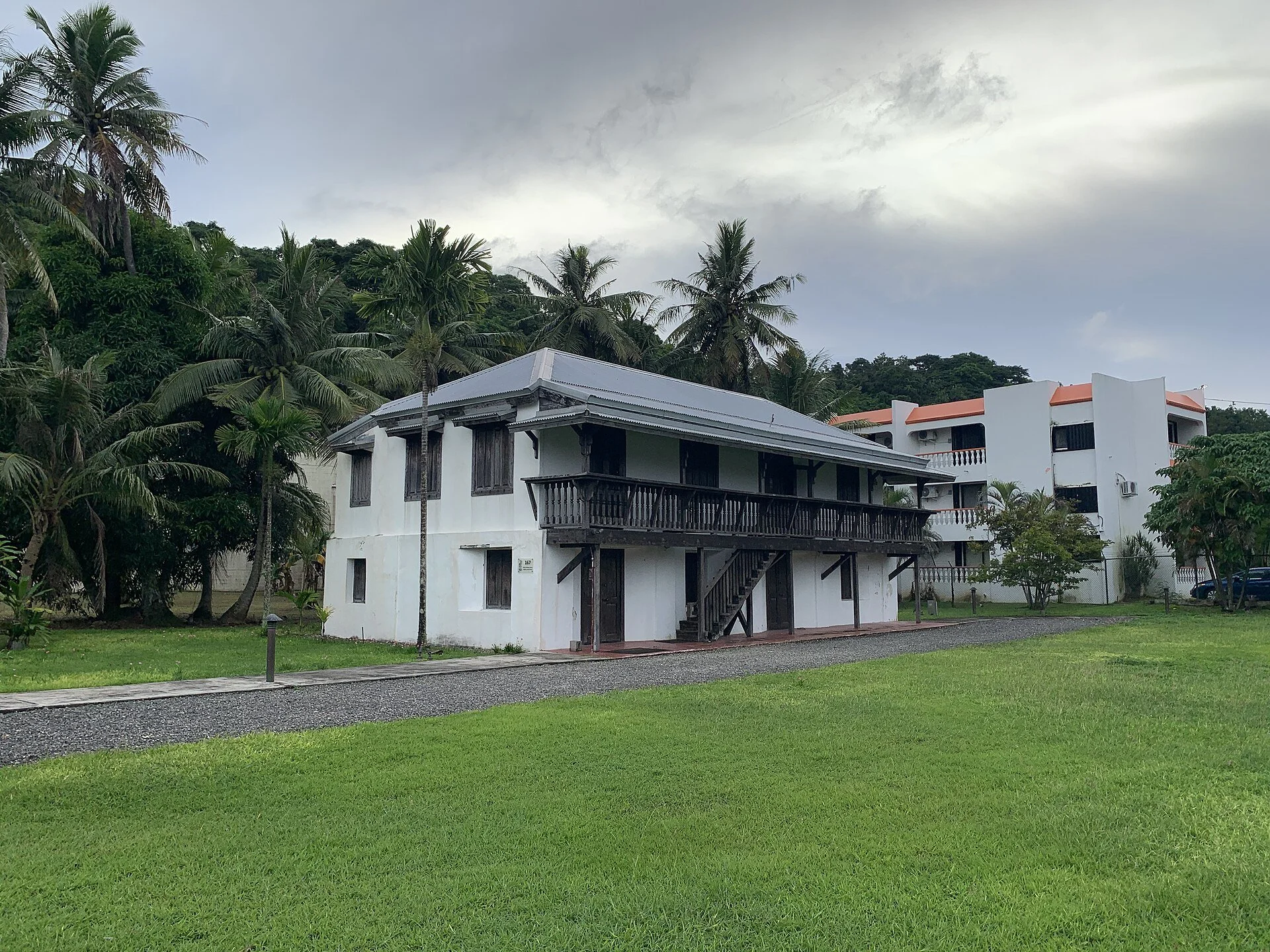
Lujan House, Hagåtña, Guam (ca. 1911)
A historic resource is eligible for Criterion C if it features a distinctive design, construction method, or form. While this criterion has often been used to designate high-style architecture, it should also be interpreted as properties that feature regional or culturally-specific ways of building and designing. For example, the Lujan House in Guam was listed on the National Register under this criterion for its mix of CHamoru craftsmanship and materials with Spanish-influenced construction methods.
A historic resource that showcases the work of a prominent architect, designer, or builder would also be eligible under this criterion. For example, many of the buildings designed by renowned Chinese American architect I.M. Pei are now being designated on the National Register.

Objects are artistic in nature and tend to be smaller in scale. This includes things such as sculptures, monuments, and murals.

Far East Center, Denver, CO
Far East Center in Denver, CO is a great example of a historic resource being designated while breaking the “50 year rule.” Opening in 1988, the Vietnamese-oriented shopping plaza was established by Vietnamese refugees. It is an important marker of Denver’s Vietnamese community and their settlement in the surrounding neighborhood, which has become known as Denver’s “Little Saigon.” In 2024, History Colorado successfully designated Far East Center on the Colorado State Register of Historic Places, which made it the first historically designated site related to Vietnamese American settlement and commercial history. Despite being under 40 years old, its designation recognizes Far East Center’s importance to telling Denver’s Vietnamese and Asian American history in place.

Districts represent a larger area of multiple properties, often referring to a distinct historic neighborhood.
Criterion A: Association with events, activities, or patterns
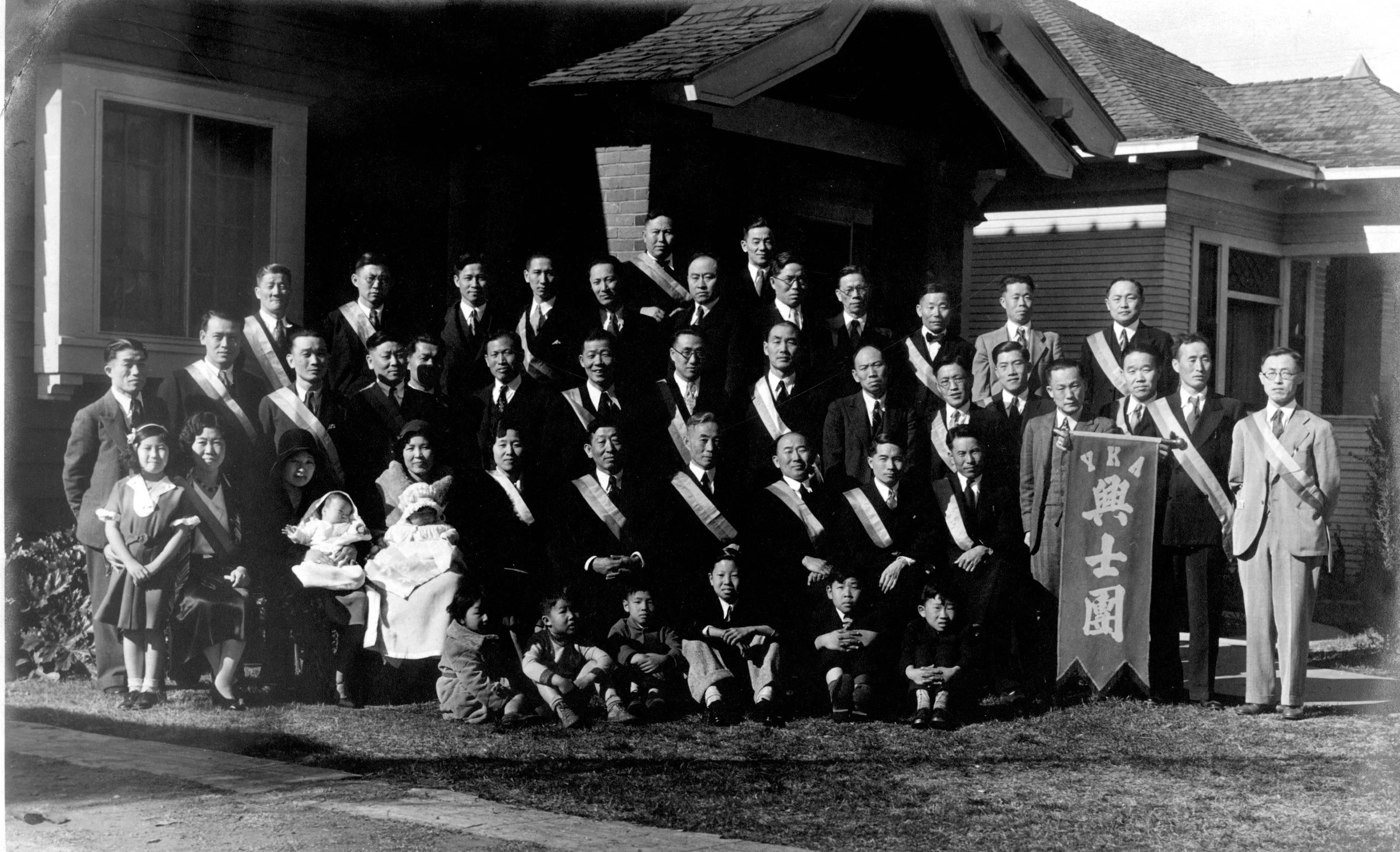
Hung Sa Dahn, Los Angeles, CA (ca. 1910)
A historic resource is eligible for Criterion B if it has a strong association with a significant person in history. Eligibility for this criterion must include a thorough history of the person and their relationship to the historic resource. Multiple people can be listed under this criterion.
Common places listed under this criterion include residences, workplaces, or significant gathering spaces of the important person or people. Keep in mind that the person or people must be strongly linked the historic resource. For example, a historic site would likely be eligible under this criterion if it was the primary residence of a historic figure, but likely not eligible if it was the coffee shop to which they frequently went.
Criterion D: Potential to yield important information
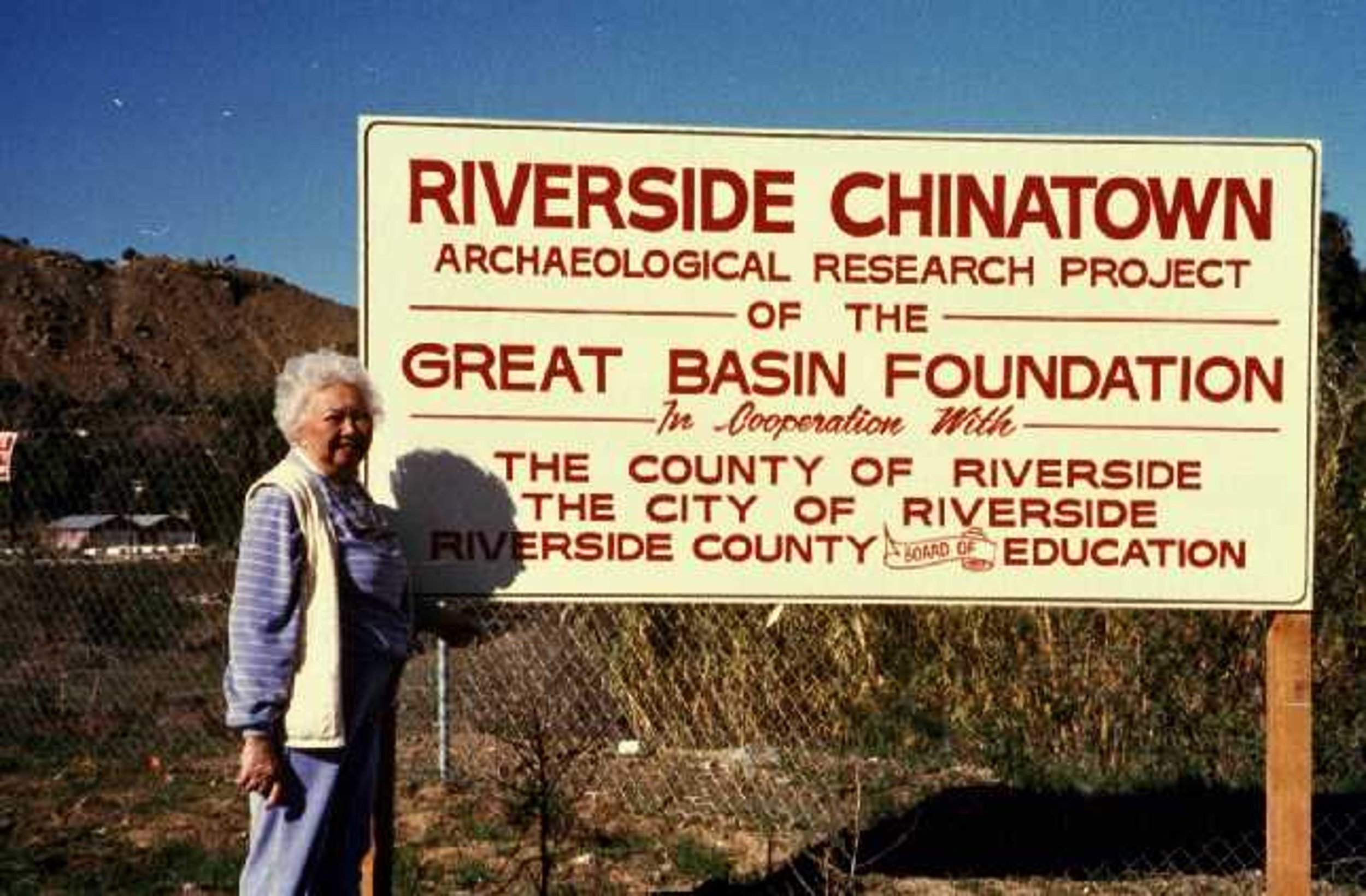
Chinatown Archaeological Site, Riverside, CA
A historic resource is eligible for Criterion D if it yields or has the potential to yield information about past eras. This most often is associated with known archaeological artifacts that may be present at a site where communities had historically settled. In many instances, it is also common to keep the exact location of these sites hidden from the public, to discourage looting of historical evidence. While many historic sites may have potential to hold important artifacts, this criterion is usually reserved for larger sites that would likely have substantial findings.
HOW: The other part of that equation is the historic resource’s “integrity” – in other words, how it shows its historic significance.
Sometimes, historic integrity can be reduced to looking only at the original physical features, but we must remember that the National Park Service identifies seven aspects of integrity to be considered:
Location: Is the historic resource still located where the building/structure/object was originally constructed? Is the site still located where the event originally took place?
Design: How are the original and/or historically significant layout, plan, architectural details, and form still evident today?
Setting: How does the historic resource retain a similar relationship to its surrounding natural or built environment during its period of significance?
Materials: What materials that were historically used to construct the historic resource are still there?
Workmanship: Related to design, is there still evidence of the construction methods used to construct the historic resource?
Feeling: Does the historic resource convey its historic nature well? How?
Association: How is the historic resource related to a significant person, event, or cultural heritage practice?
While evidence of original materials, design, and craftsmanship has historically been emphasized, it’s important to think critically about how a site may have a high level of integrity across all seven aspects.
Case Study: Minidoka National Historic Site
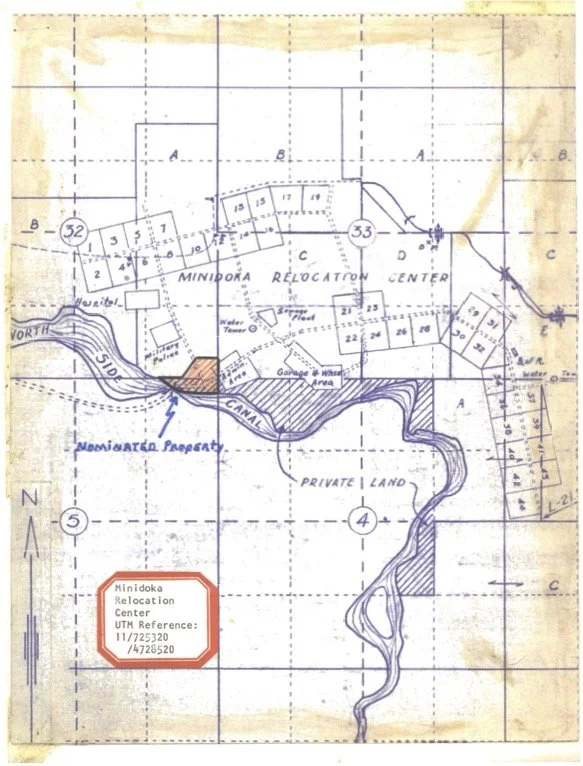
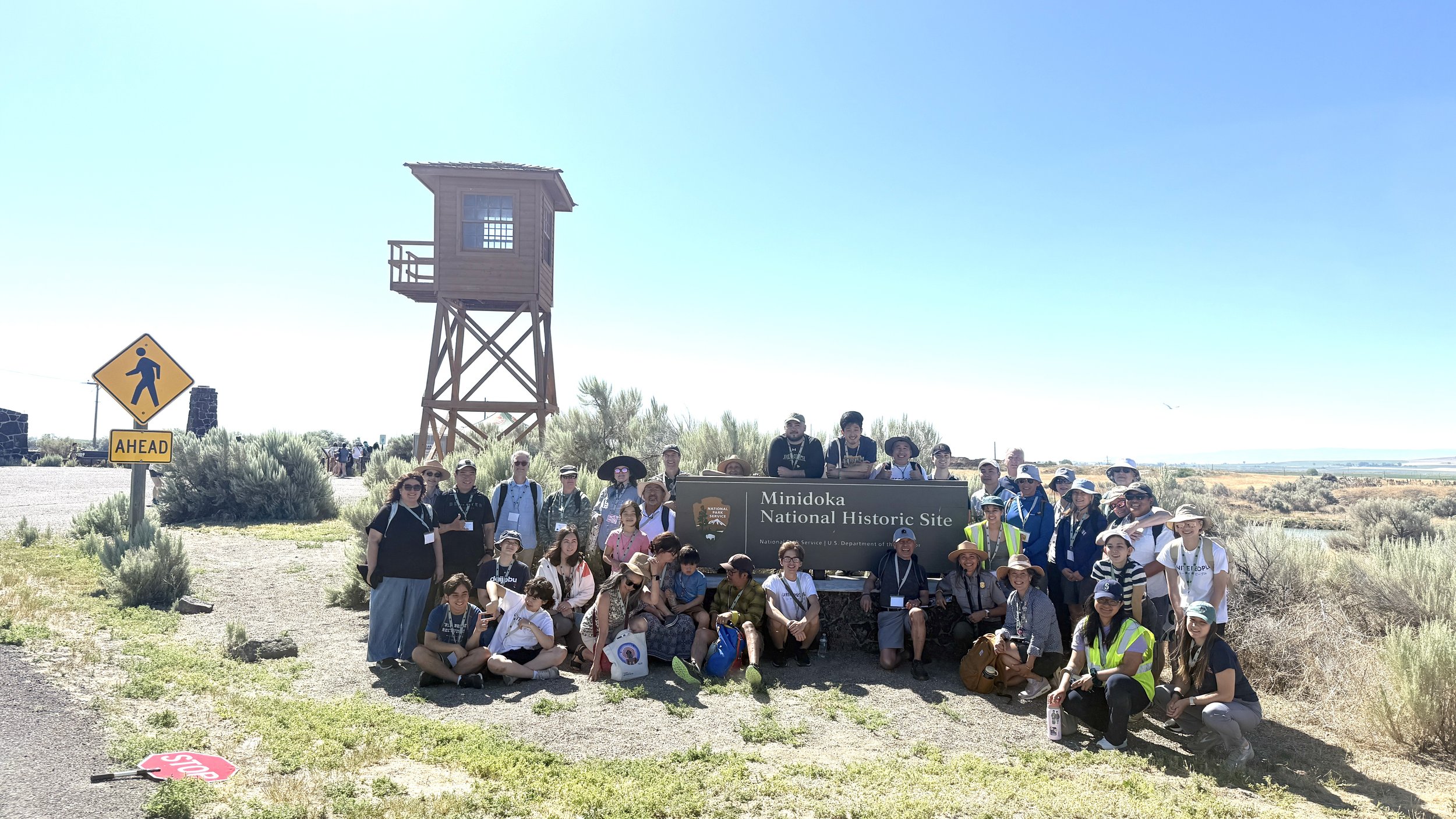
Minidoka National Historic Site, designated on the National Register in 1979, was one of ten Japanese incarceration camps in the United States during World War II. From a historic designation standpoint, Minidoka and other Japanese American incarceration sites provide an important precedent for how to approach historic integrity. Like many others, Minidoka’s infrastructure was torn down after World War II. At the time of its designation, the site only had two remaining historic buildings, the watch tower and the visitor’s reception center — both of which were in poor condition. As admitted by the nomination writer, the Minidoka site in 1979 “shows little evidence of its former use as an internment camp.”
From a strict integrity lens, Minidoka would “score” low on design,, materials, and workmanship. However, the site itself was considered eligible for designation because of its original location, strong association with the period of Japanese American incarceration in America, and remaining buildings. Another way Minidoka was deemed eligible was through its boundaries; despite the incarceration camp taking up nearly 1000 acres of land, the portion that is formally designated only covers the two remaining buildings near the historic entrance of the site, where the rest had been repurposed as primarily farmland after World War II.
Altogether, the designation of Minidoka shows that not all seven aspects of integrity need to be present, and that there are multiple ways to recognize important historic resources even if they have been significantly altered or lost.
WHO: Anyone can legally fill out a nomination form for the National Register of Historic Places and submit it for consideration, though a preservation professional is often hired to research and write the nomination. This is also often the case for state and local historic registers.
The National Register requires property owner consent for a property to be designated. In the case of districts, the National Register requires proof of at least 50% of its property owners consenting to the designation. This owner consent requirement will vary across different state and local historic registers.
NOTE: A common term you will see in certain grants or tax credit requirements is “listed on or eligible for.” In most cases, eligibility is not a personal opinion, but a formal determination from the governing entity of the historic register. For example, the National Register has a formal Determination of Eligibility form (DOE) that must be completed and approved for a historic resource to be considered “eligible.”
DESIGNATION ELIGIBILITY
Obtaining all this information and putting a historic nomination together often requires considerable research and site visits. In many instances, communities will work with a historic preservation professional with designation experience to complete the nomination. However, it’s important to note that a successful nomination should always include local community input, and bring in all relevant stakeholders like property owners, tenants, and even descendants whenever possible. This ensures that these places – particularly ones attached to underrepresented communities – have their official histories told with community voices and expertise in mind.
From start to finish, a successful designation effort can take anywhere from a few months to several years, depending on scope and capacity. Hiring a professional for this work can range from a few thousand to tens of thousands of dollars, again depending on the scope of work. In some cases, there are grant opportunities to help support this work at the national, state, and local levels. A good start is to contact a preservation organization, such as APIAHiP or your local nonprofit, to see what funding options may be available to you.
PURSUING DESIGNATION
ADDITIONAL RESOURCES
National Register Bulletins (NPS)
Historic Designation Effects