


READING PATH FORWARD:
APIAHiP's deep-dive into the National Park Service’s Finding a Path Forward: Asian American Pacific Islander National Historic Landmarks Theme Study (2018). This virtual book club and workshop series invited participants to engage with the 17 essays and supplemental resources, examining their implications for historic preservation. Together, we fostered community, deepened our understanding, and inspired tangible actions to identify, nominate, and preserve the places that embody our shared history and cultural heritage!
Reading Path Forward

Reading Path Forward ran from January 2025 through June 2026. Over 18 months, monthly sessions brought essay authors and guest speakers together with participants across the country to discuss historic preservation and APIA themes. The program has concluded, and session recordings and related media are available below.
Recordings
-
Introduction and Essay 1: Imperialism and Migration
-
Essay 2: A Sea of Islands: Early Foundations and Mobilities of Pacific Islanders
-
Essay 3: Archaeological Research on Asian Americans
-
Essay 4: Immigration, Exclusion, and Resistance, 1800s-1940s
-
Essay 5: Establishing Communities, 1848-1941
-
Essay 6: Reframe, Recognize, and Retell: Asian Americans and National Historic Sites
-
Essay 7: Asian American Businesses, 1848 to 2015: Accommodation and Eclectic Innovation
-
Essay 8: The Architectural Legacy of Japanese America
-
Essay 9: Sites of Resistance to Imperialism
-
Essay 10: Asian Americans and World War II
-
Essay 11: Asian Americans: The Cold War
-
Essay 12: Pacific Islanders in the U.S. and their Heritage: Making Visible and Visibly Absent
-
Essay 13: Asian Americans and Cultural Retention/Assimilation
-

Essay 14: Asian American Activism and Civic Participation: Battling for Political Rights and Citizenship, 1917 to the Present
-
Essay 15: Asian Immigrants and Refugees: Demographic Transformations in the United States from World War II to the Present
-
Essay 16: New Asian American Communities: Building and Dismantling
-
Essay 17: AAPI Political Mobilization and Participation
-
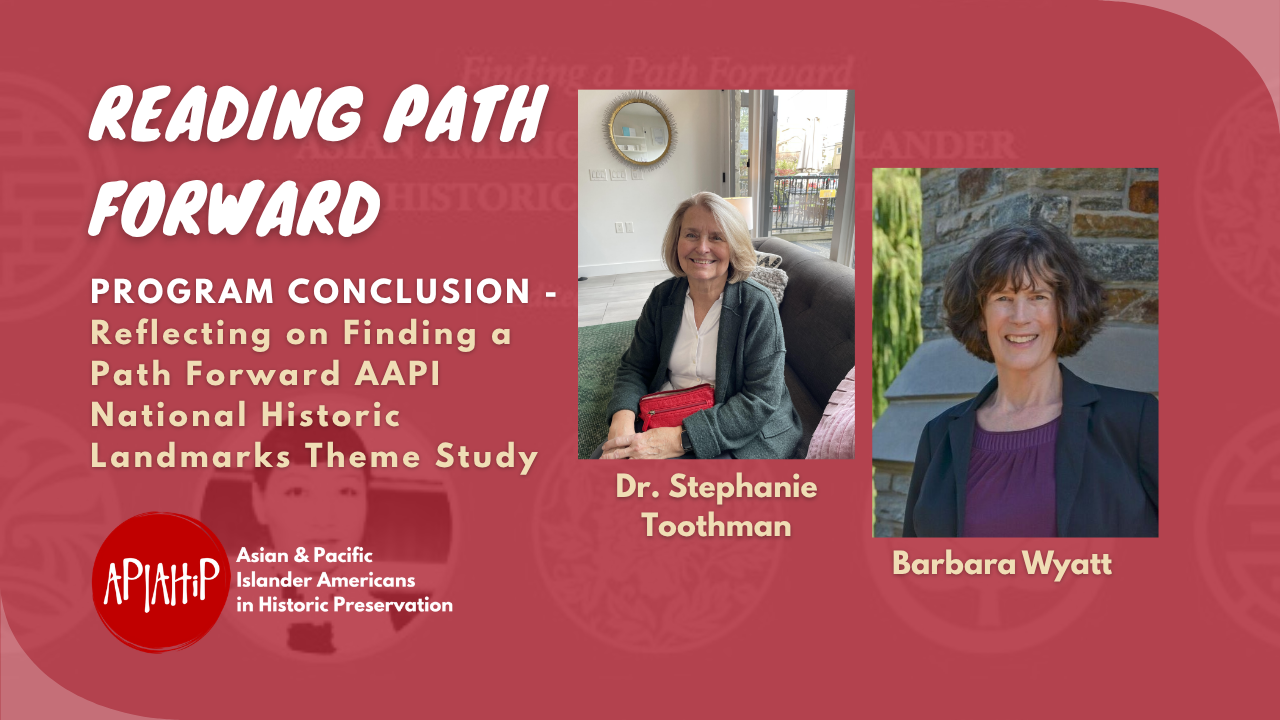
Reflections from former Keeper of the National Register and National Park Service Historian
-
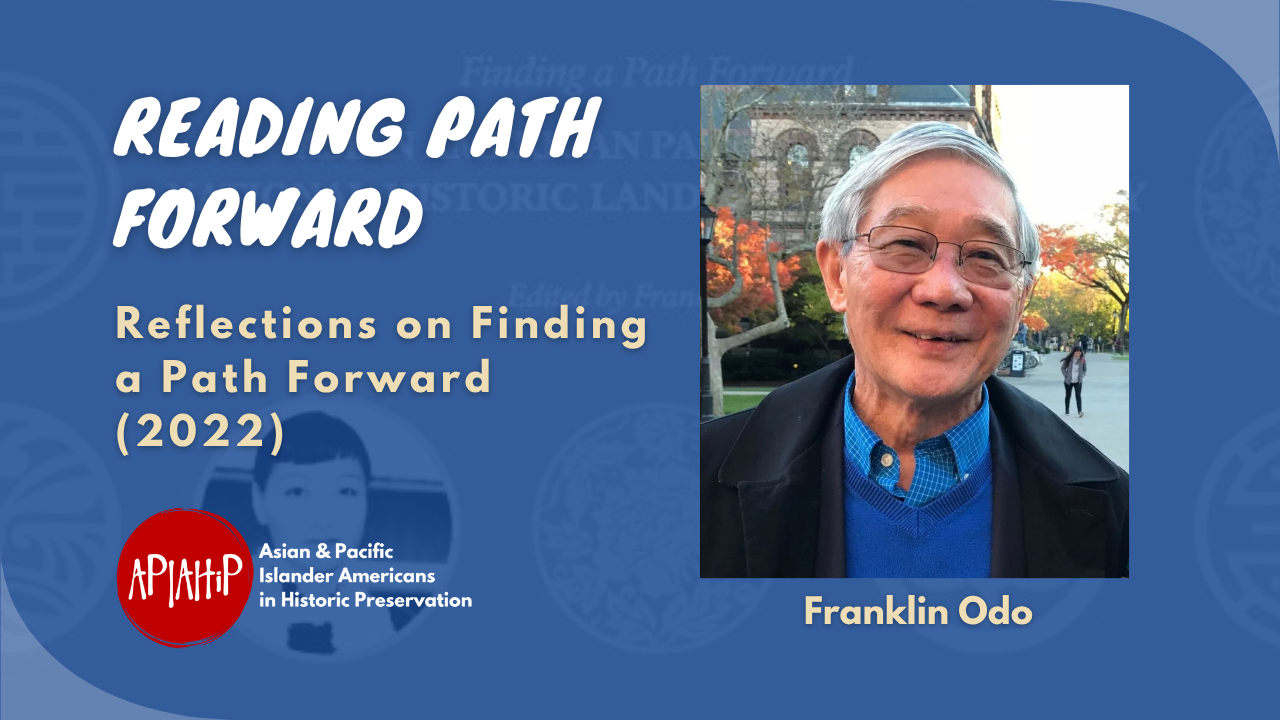
Reflections from Franklin Odo (2022)
-
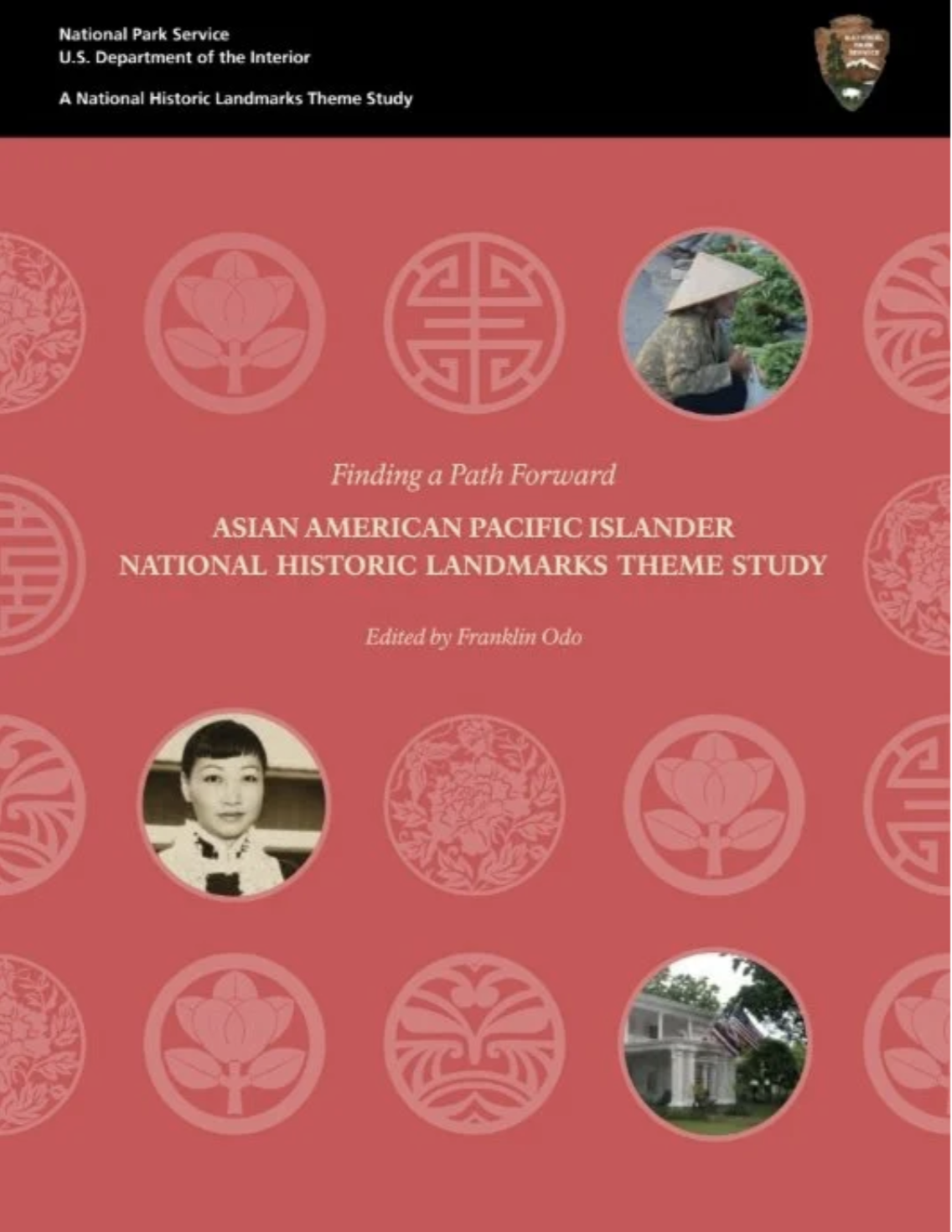
Finding a Path Forward: AAPI National Historic Landmarks Theme Study Full PDF
Frequently Asked Questions (FAQs)
-
A mix between a book club and a workshop series surrounding the Asian American Pacific Islander National Historic Landmarks Theme Study essays.
-
It's the latest collection of work initiated and produced by the National Park Service (NPS) that furthers the designation and preservation of AAPI history specifically thought the National Historic Landmark (NHL) program. NHLs are the highest level of designation for historic and cultural sites. Often, the 2600+ NHLs are the most exemplary of 99,000+ sites on the National Register of Historic Places (NRHP) of which AAPI history is recognized between 1-3% of the sites at either levels of historic designation. Investigating this body of work enables us to address this gap in representation in an informed and communal way!
-
APIAHiP has a limited supply of the print version and will be requesting more from NPS to distribute through this program. However, you can access a free PDF copy here.
-
At this time, we do not plant to restart Reading Path Forward, but hope our network visits the recorded sessions on our YouTube playlist.
We are welcome media recommendations to share with our network. If you have a book series, film, video, or other media relevant to APIA historic preservation, contact us at info@apiahip.org or submit a Preservation Pathways inquiry to discuss further.
Partners in Reading Path Forward


