

ADVOCACY & EDUCATION
LESSON 4
GOAL: This lesson will provide an overview of using advocacy and public education in a historic preservation lens. It will cover the basics of policy advocacy, public education efforts, and community organizing.
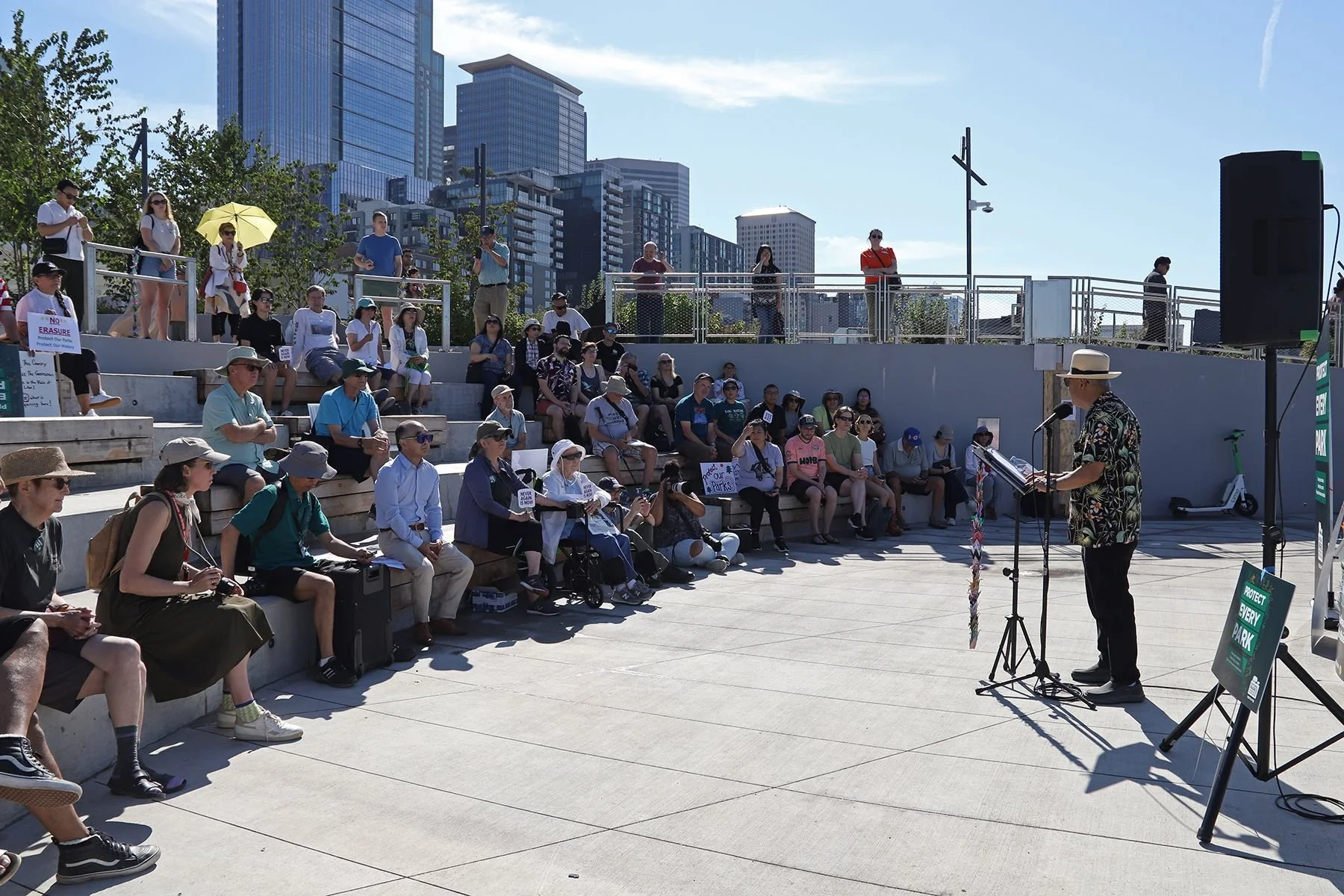
Protect Every Park, Seattle, WA
INTRODUCTION
The last three lessons provided basic building blocks for historic preservation. They’ve covered what makes a site historic, how designation works, and how physical preservation actually gets done. But here's the thing: knowing the tools is only part of it. Getting people to use them, fund them, and support them? That's a whole other challenge and what this lesson is about.
Advocacy and education are how preservation projects move from an idea to a reality. And unlike designation or physical preservation work, advocacy is a skill most of us already have some version of, whether it's speaking up at a neighborhood meeting, sharing something on social media, or gathering your community around a cause.
For APIAHiP, advocacy shows up in two main ways. The first is making sure our communities know about the tools, resources, funding, and policies that are available to protect the historic places they care about. The second is making the case to decision-makers, whether that's a city councilmember, developer, or federal agency, that these places matter, and that there are real alternatives to neglect or demolition that haven't been considered yet.
While advocacy and public education can show up in many different ways, this lesson will categorize them into three different types:
Advocacy efforts directed toward policy decision-makers, such as elected and appointed government officials. This category is often employed when there is a specific desired outcome from decision-makers, such as passing legislation or approving a historic designation.
POLICY ADVOCACY
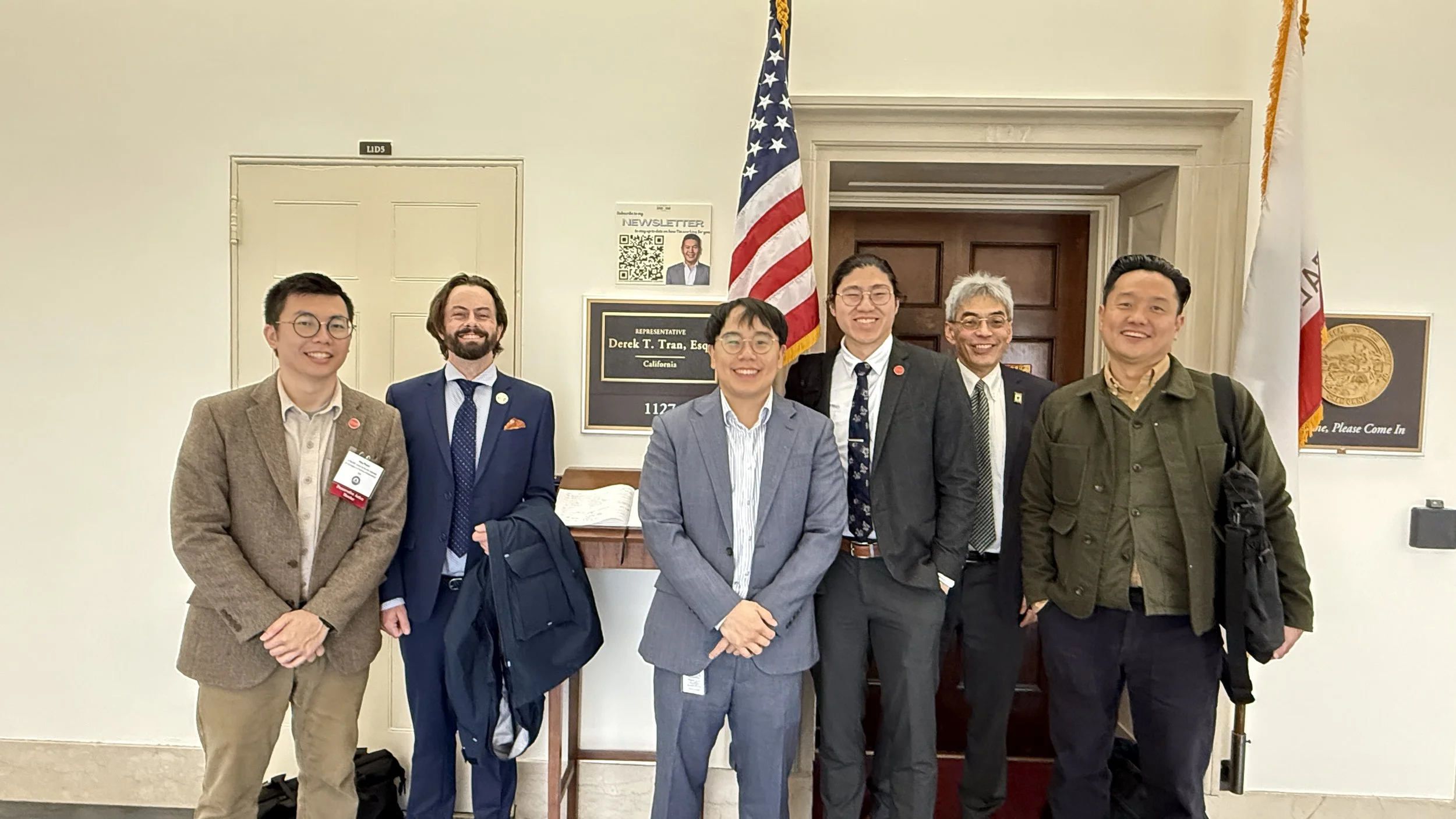
APIAHiP meeting with Congressmembers in D.C.
Events, walking tours, publications, social media posts, and more. This category is meant to educate the general public about a certain history and/or place. While it can include specific asks or desired outcomes, it can also be primarily educational or entertaining.
PUBLIC EDUCATION
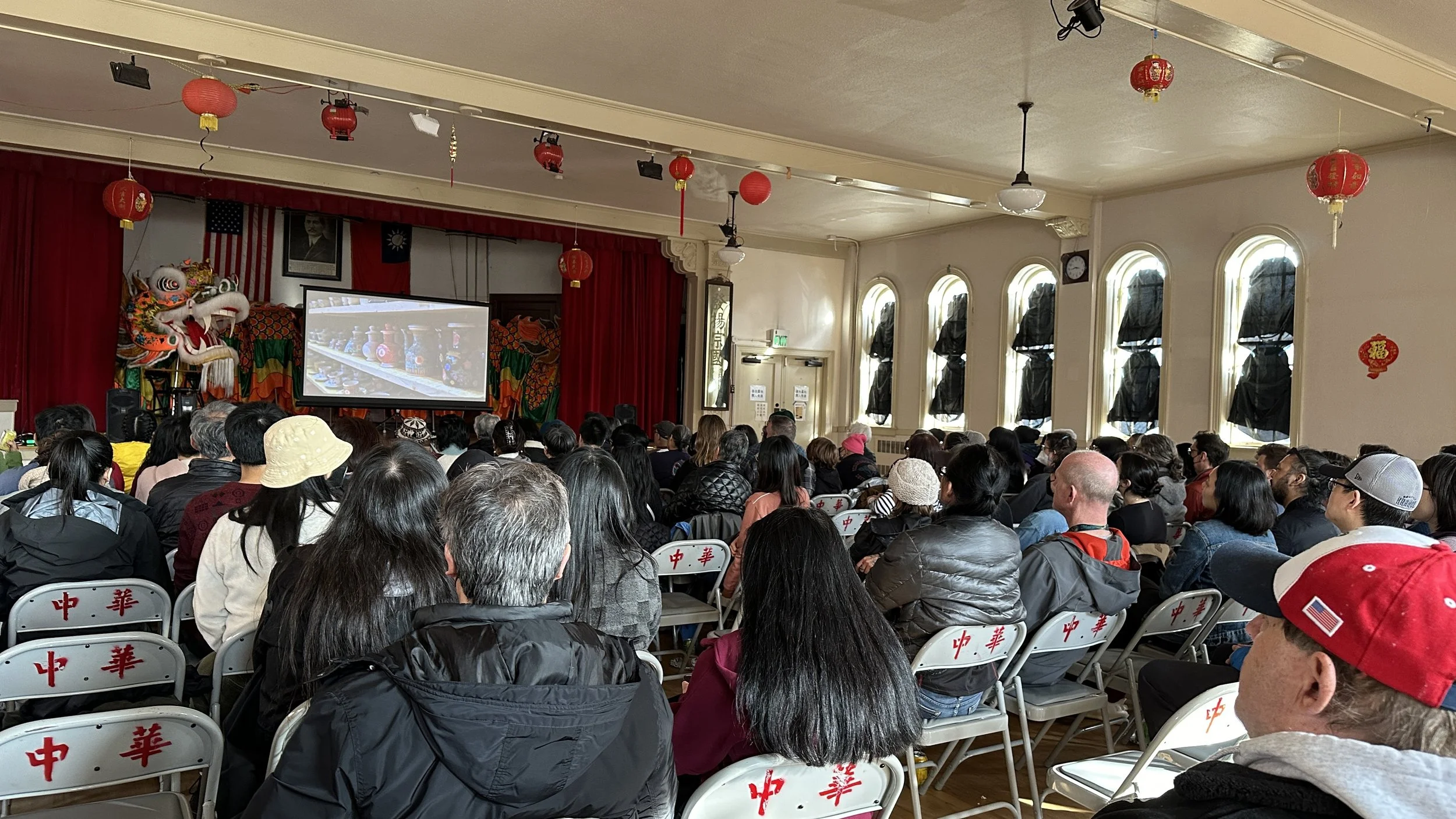
Film screening in Seattle’s CID neighborhood..
Mobilizing community members to make their voices heard in as public setting as possible. This category is a combination of policy advocacy and public education: it has an issue-focused approach (policy advocacy) while engaging a large audience (public education).
COMMUNITY ORGANIZING
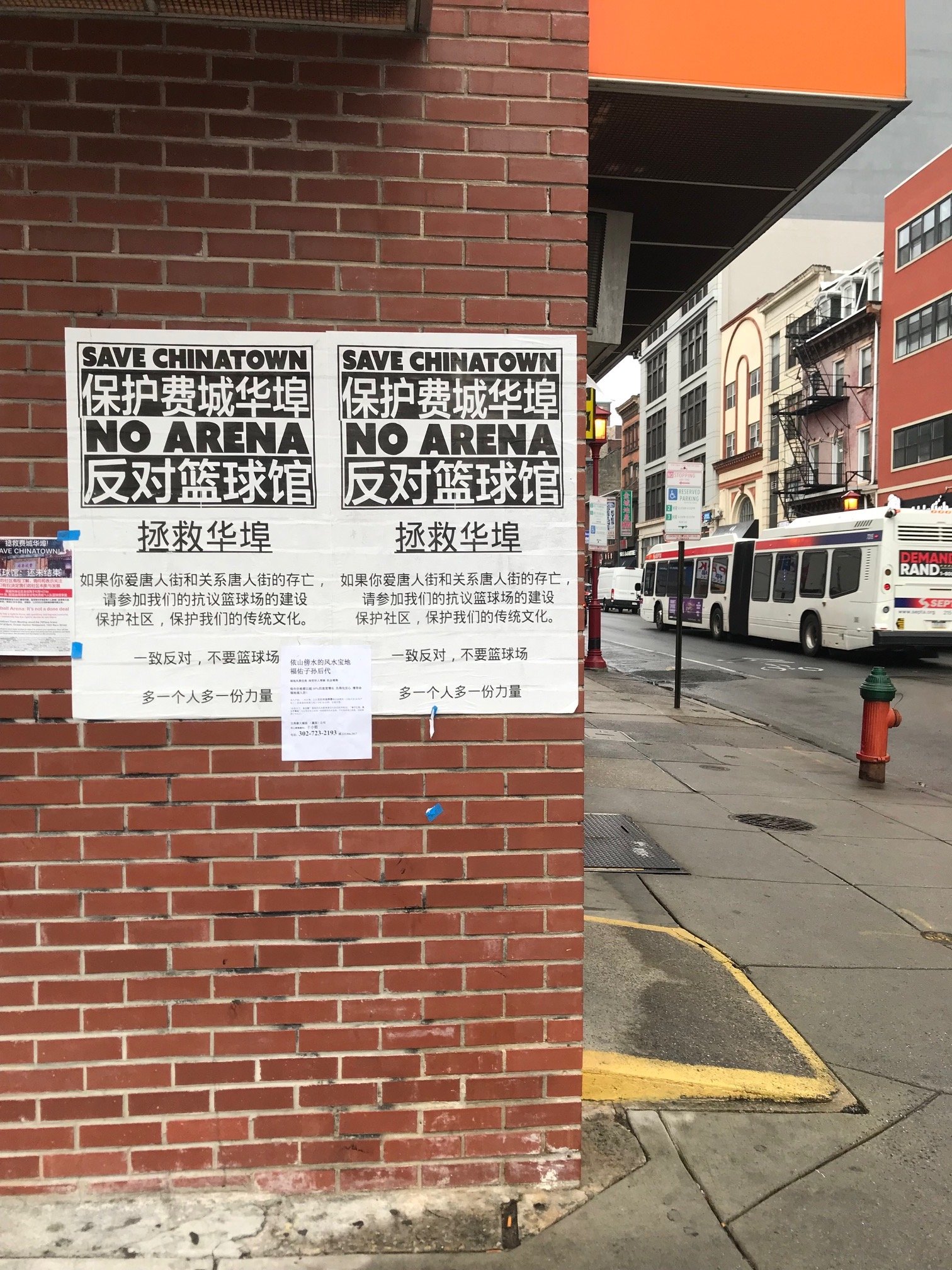
Signage for Save Chinatown in Philadelphia.
Because historic preservation in the United States is closely tied to a legal framework, we'll start with policy advocacy, which is the most direct way to influence the decisions being made about historic sites. As with other legal frameworks, policy advocacy in preservation is generally organized into three levels: national, state, and local. Each level requires a different approach and targets different decision-makers.
National: At the national level, preservation advocacy is mostly about legislation and federal funding. The two most common asks are to maintain or increase funding for the Historic Preservation Fund, also called the HPF, and to strengthen the federal historic tax credit, or the HTC.
The Historic Preservation Fund is distributed to state and tribal historic preservation offices, which use it to review projects, administer grant programs, and engage communities on preservation. The federal historic tax credit currently provides a 20% tax credit on qualified rehabilitation projects for income-producing historic properties. These two programs are the backbone of how preservation gets funded a federal level.
Meeting with your members of Congress, either in your local district or in Washington, D.C., is the most direct way to make these asks. For preservation organizations like APIAHiP, that often means joining coalitions like Preservation Action and the National Trust for Historic Preservation during the annual Advocacy Week, where representatives from across the country meet directly with congressional offices about preservation issues. Because federal funding has a direct impact on what happens to local historic sites, it's worth knowing who your representatives are and where they stand.
State: State-level advocacy follows a similar approach, directed toward your elected state officials, state historic preservation offices, or state review boards. It can address both broad policy issues and specific projects. One big policy item at the state level is the state historic tax credit. Currently, 38 out of 50 states have their own historic tax credit, which can stack on top of the federal tax credits and make rehabilitation projects significantly more viable. But not every state has one, and the ones that exist are often underfunded or in need of expansion.
State policy can also cut the other direction. In Washington state, there was recently a bill proposed that would have required property owner consent for any local designation of historic sites under 100 years old. In California, there has been legislation introduced to exempt housing developments that increase unit counts from historic review entirely. Both cases threaten to undermine local preservation ordinances and efforts. The result can be demolition by default, without any real evaluation of what's lost.
In both these cases, historic preservation is seen as the enemy to development and housing. However, rather than an either/or situation, historic preservation tools exist – such as adaptive reuse and sensitive infill construction in historic districts – to make it a both/and situation. Housing and economic development are important, but can be pursued in ways that don’t demolish our historic and cultural resources. Whether state legislation is weakening preservation designation, increasing funding, or making processes more complicated, nowing what's being proposed at the state level, and whether it helps or hurts the places your community cares about, is part of being an effective advocate.
Local: Local advocacy tends to be the most tangible and focused. Instead of broad legislation, you're often dealing with specific projects: a demolition permit, a designation application, or a development proposal that could significantly change a neighborhood. Targets can include your local historic preservation commission, zoning board, or city council. The most common action is showing up, in person, to provide public comment on specific actions in public hearings. A written letter can also often be submitted, but showing up in person shows that real people care, and that there's a community rallying behind this issue.
One example is the Seniors in Action campaign in Seattle's Chinatown-International District. Since 2022, community members have attended every Sound Transit hearing related to proposed light rail changes and their impact on the neighborhood. Sometimes they've come in matching t-shirts to signal consensus. That kind of sustained, visible presence is what can help amplify your voice.
For many of the decision-makers you'll be meeting across all levels, Asian and Pacific Islander American preservation issues are not always on their radar. It's not necessarily because they don't care. It's because our communities have historically been left out of these public processes. Showing up consistently, making the case, and refusing to let others speak for us is how that changes.
POLICY ADVOCACY
PUBLIC EDUCATION
If policy advocacy is directed at a specific set of decision-makers, then public education is directed at everyone else: communities, neighbors, and the general public. The goal isn't always to change a vote or get a permit approved. Sometimes it's simply to make sure people know a historic site exists and why it matters. There are two ways to look at public education: event-based and media-based.
Event-Based: Event-based public education includes workshops, town halls, community walks, film screenings, and more. In-person events have real advantages: they can happen at or near the historic site itself, which is a powerful way to connect people to a place. They reach community members who may not be online or on social media. And they build the kind of relationships that carry a campaign over time.
These events don't have to be formal or packed with information. Some of the most effective preservation education has happened at a happy hour at a historic building or a community arts project that draws people to a site that might otherwise get overlooked. The goal is to get people there, make them feel connected, and give them a reason to care.
The limitation of in-person events is real too: they take coordination, cost money, and typically reach the people who already have the means to attend. That's where media-based education comes in.
Media-Based: Media-based public education happens online or in print. News articles, social media campaigns, documentary content, "most endangered" lists, and awareness campaigns can reach far beyond what a single event can. Once published, that media becomes a resource you can share with funders, elected officials, reporters, and other potential partners.
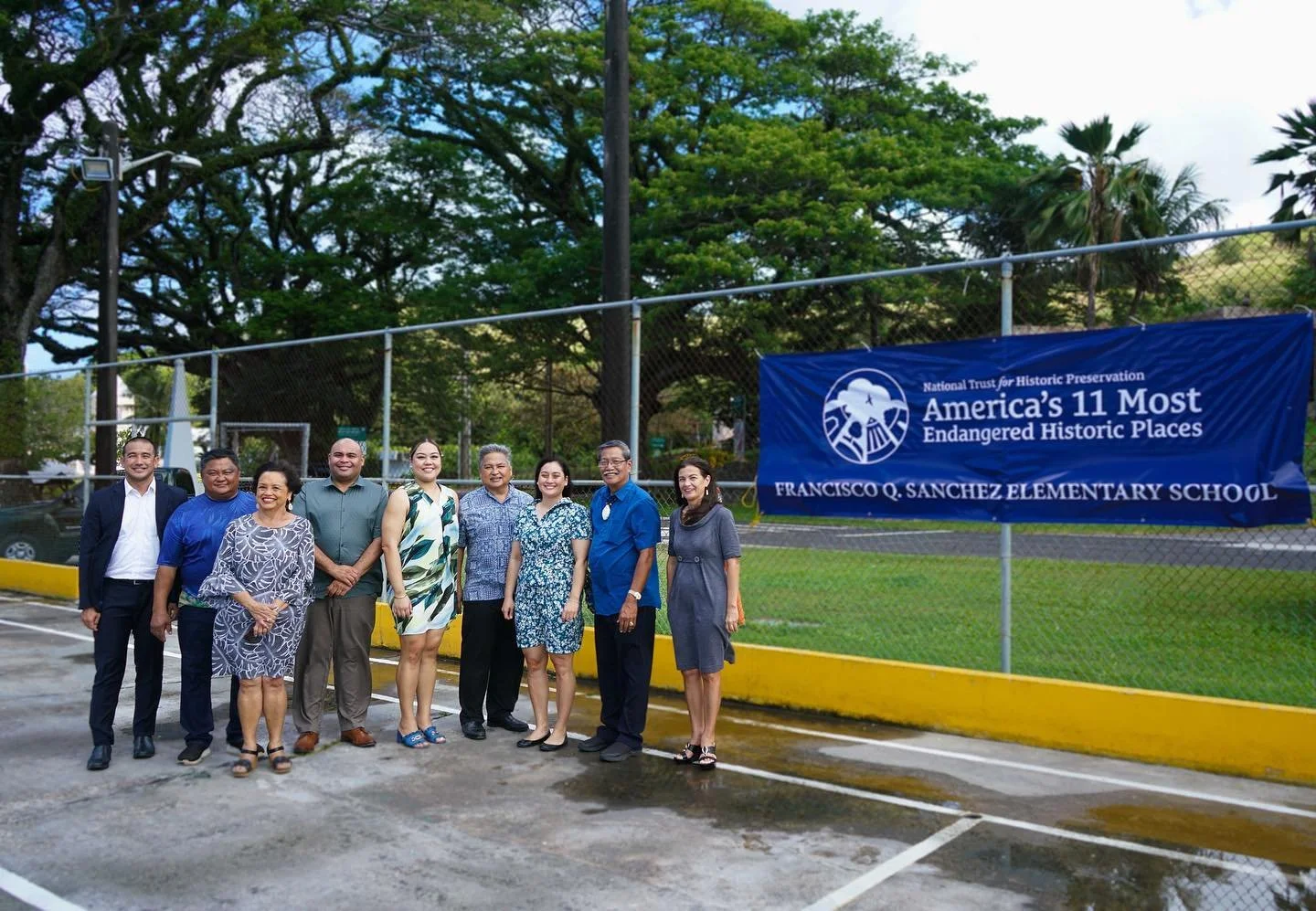
One of the most recognized media-based tools in historic preservation is the National Trust for Historic Preservation's annual 11 Most Endangered Historic Places list. Many statewide or community-specific organizations, such as Latinos in Heritage Conservation, have their own “most endangered” lists too. Getting a site on one of these lists can change its trajectory. At the same time, while being listed on the 11 Most Endangered list brings a historic site to the national spotlight, it’s important to remember each of those campaigns grew from local advocacy first.
The challenge with media-based education is visibility. The internet is full of content, and if your campaign isn't well planned, it can get lost. One way to amplify your reach is to work with existing media outlets, like the local news and nonprofit organizations that already have established audiences.
Case Study: Francisco Q. Sanchez Elementary School 11 Most Listing
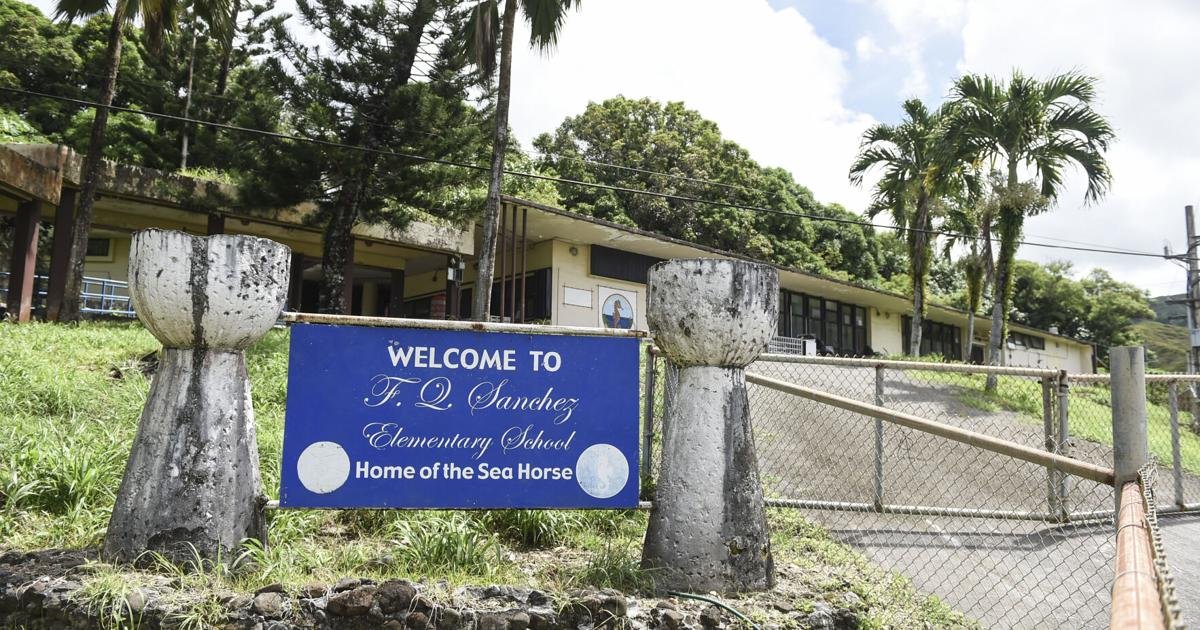
Francisco Q. Sanchez Elementary School, Humåtak, Guam. Credit: Guam Daily Post (left) and Pacific Daily News (right).
One example is the Francisco Q. Sanchez Elementary School in Humåtak, Guam, which served as the only educational institution in the village. Built in 1953 by internationally known architect Richard Neutra, the school was named after its first principal, Francisco Q. Sanchez, an early pioneer of historic and cultural preservation from Humåtak. Despite its architectural and cultural significance, the school closed in 2011 due to financial constraints and faced an uncertain future. In 2022, the building was listed on the National Trust’s 11 Most Endangered List, which in turn helped spur Guam to release $3.5m toward its rehabilitation later that year.
COMMUNITY ORGANIZING
The third form of advocacy is community organizing, which includes protests, rallies, demonstrations, petitions, and similar actions. If policy advocacy is about targeting decision-makers and public education is about raising awareness, community organizing is about mobilizing people to take visible, collective action. Done well, it combines the energy of public education with the strategic focus of policy advocacy.
Particularly with community organizing, it’s important to remember that preservation issues are never just about old buildings. They're tied to issues in housing, affordability, displacement, civil rights, cultural belonging, the environment, and more. In many cases, advocacy campaigns may be fighting for preservation without naming it explicitly. At other times, preservation is just one part of a larger campaign that brings multiple groups together under a broader cause.
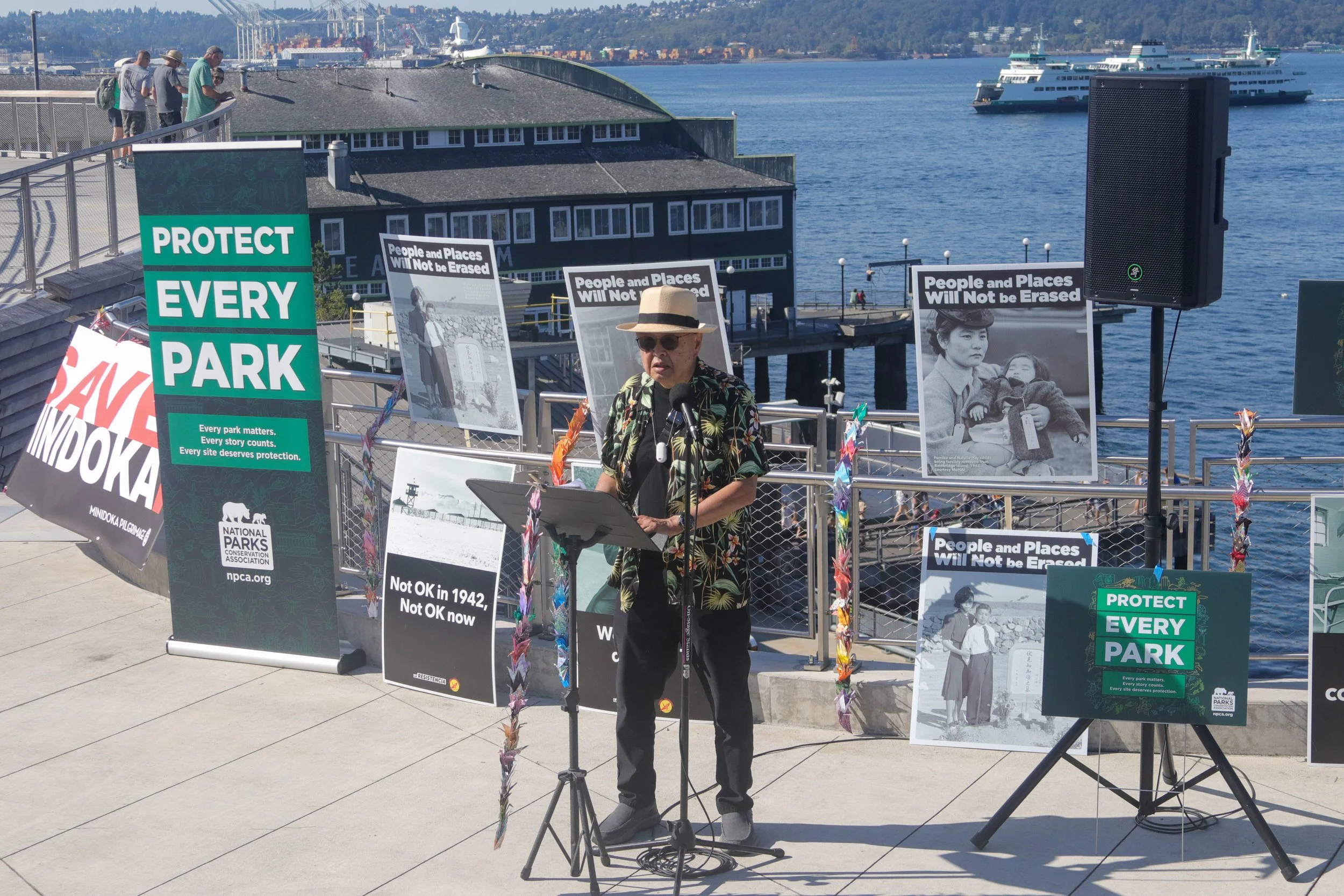
Protect Every Park, Seattle, WA
This “day of action” in Seattle protested the erasure of Japanese American incarceration and other social justice sites as they connected to federal attacks on the National Park system. Organized locally by the Minidoka Pilgrimage group as part of a larger nationwide campaign, the event partnered with the National Park Conservation Association, APIAHiP, Tsuru for Solidarity, the Wing Luke Museum, and Densho to highlight the ongoing threats to Japanese American incarceration sites and its impact to all communities.
Save Chinatown, Philadelphia, PA
In Philadelphia, community organizations have been fighting to protect Chinatown from major development projects for decades, most recently from a proposed new 76ers arena. They’ve accomplished this in protests in the street, city council hearing demonstrations, and more. The campaign has drawn on years of organized resistance and citywide solidarity in order to keep the neighborhood's history and community at the center of every conversation.
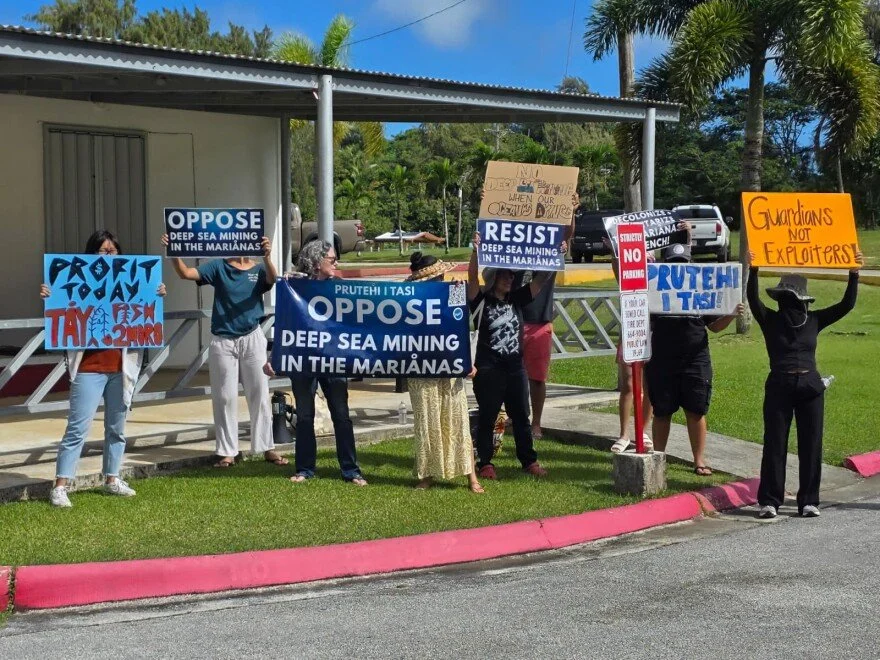
Protesting Deep Sea Mining, Guam & Commonwealth of the Northern Mariana Islands (CNMI)
In Guam and the Commonwealth of the Northern Mariana Islands, communities are organizing against federal proposals for offshore deep-sea mining that would desecrate culturally significant land and waters. While related to Indigenous cultural heritage and preservation, this effort is also closely tied to issues in sovereignty and environmental justice and can be framed in multiple ways.
Photo Credit: Bryan Manabat, KPRG News
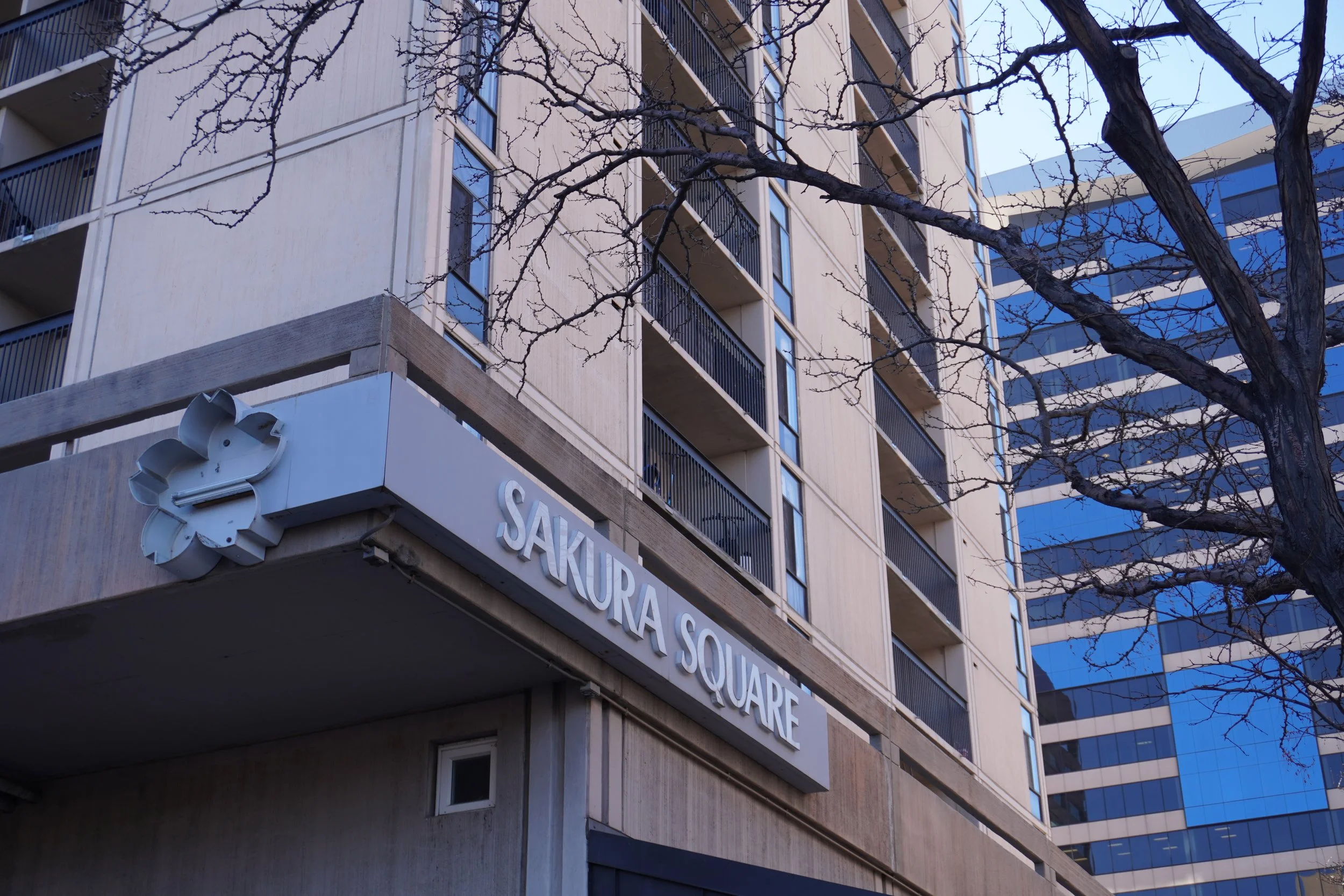
Little Saigon & Sakura Square, Denver, CO
In Denver, where APIAHiP's National Forum will take place in September 2026, communities in Little Saigon and around Sakura Square are navigating the tension between neglect and redevelopment pressure. Both campaigns are calling on decision-makers to support meaningful community engagement and a fair distribution of resources toward preservation outcomes. Advocates have used petitions, social media posts, and newspaper outlets to highlight the pressing issues.
PURSUING ADVOCACY & EDUCATION
In the last lesson on physical preservation, we asked: what treatment matches the goals for your historic site? Advocacy works the same way. You start by asking what type of approach is needed for your specific issue, and who should be targeted. Is it the community, who might not know about the historic building in their neighborhood or how to support it? Or is it a decision-maker who has the power to act, but hasn't been given a reason to?
Spending months and significant resources hosting a public gala might not be as effective as attending a single city council meeting. Sending emails to a legislative office might not be as powerful as getting online and posting about the issue for everyone to see. Sometimes, the answer is all of the above. The right advocacy strategy depends on your goal, your resources, and the moment you're in.
Particularly for Asian and Pacific Islander American historic sites and communities, the stakes are real. The places that matter to us have often been treated as if they don't. Advocacy, in any form, is how we push back on that.
ADDITIONAL RESOURCES
Preservation Advocacy Organizations