
CHINESE EXCLUSION ERA HISTORIC SITES IN WASHINGTON: A HISTORIC CONTEXT STATEMENT PROJECT
PROJECT SUMMARY
In partnership with the Washington Department of Archaeology and Historic Preservation and with funding from the National Park Service’s Underrepresented Communities Grant, APIAHiP completed a historic context statement project on Chinese Exclusion in Washington. The project included three components:
Historic Context Statement
National Register of Historic Places Nomination
Historic Resources Survey
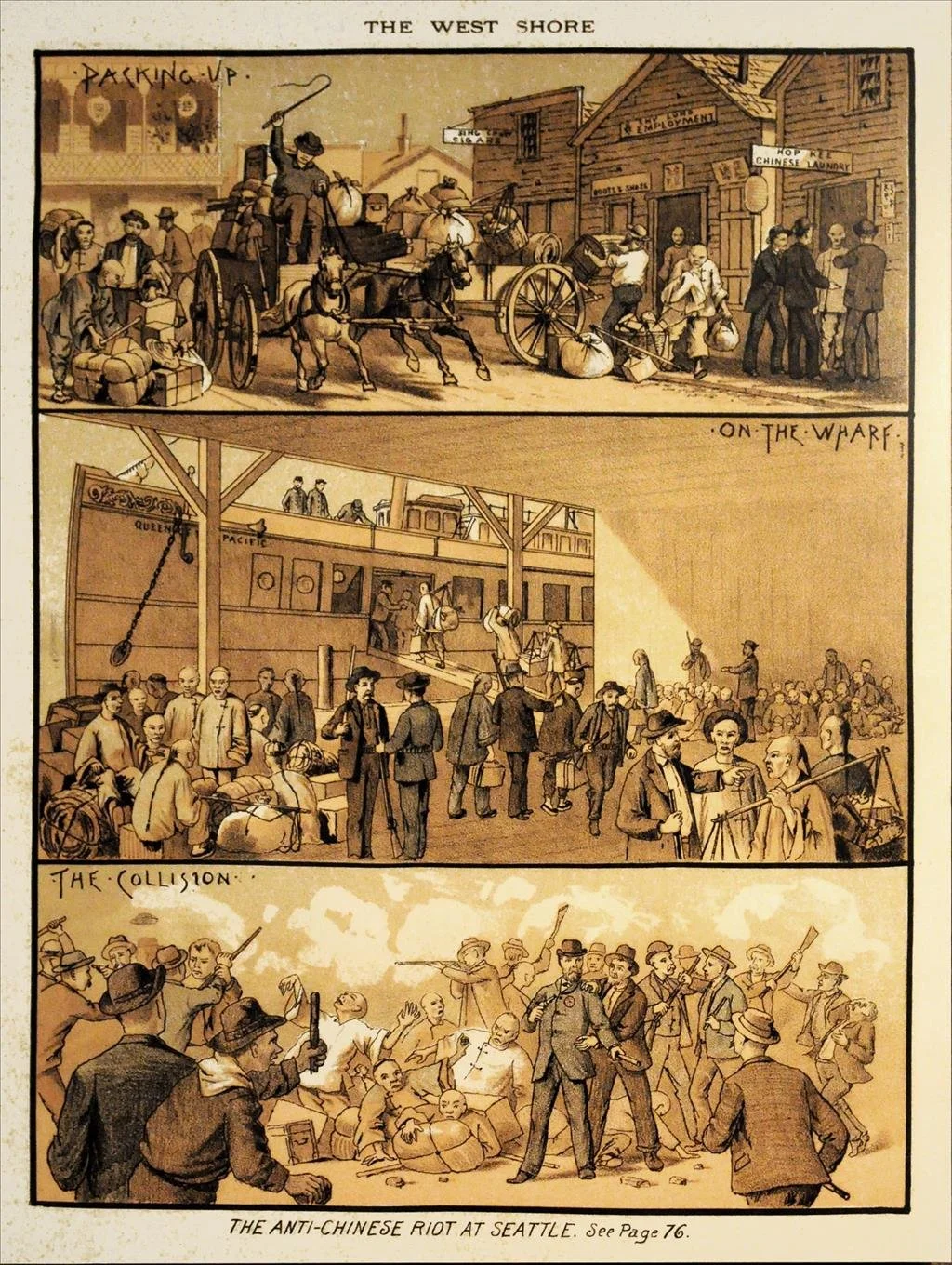
The project sought to provide a place-based understanding to an underrepresented history where much of its associated sites, by its nature, have been erased or demolished. The Chinese Exclusion Era, roughly bounded by the national Chinese Exclusion Act (1882-1943), represented over half a century of institutionalized and, at times, violent discrimination against Chinese communities. In Washington, it manifested in violent expulsions of entire Chinese communities across the state, and additional discriminatory laws at the state level. Despite this, Chinese communities continued to survive and safeguarded their own community, building their own institutions and continuing to contribute to Washington’s development.
HISTORIC CONTEXT STATEMENT
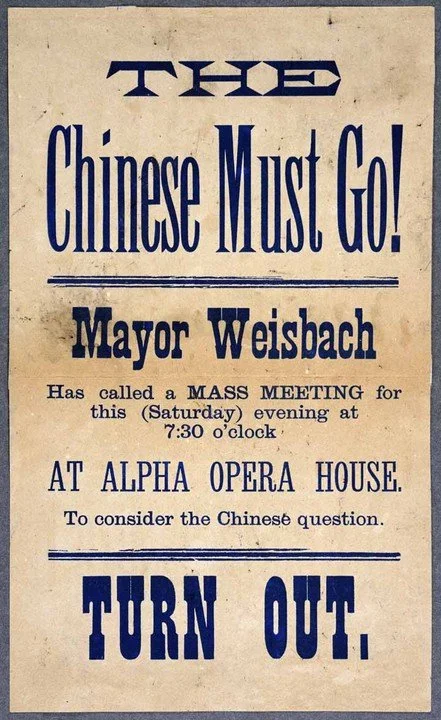
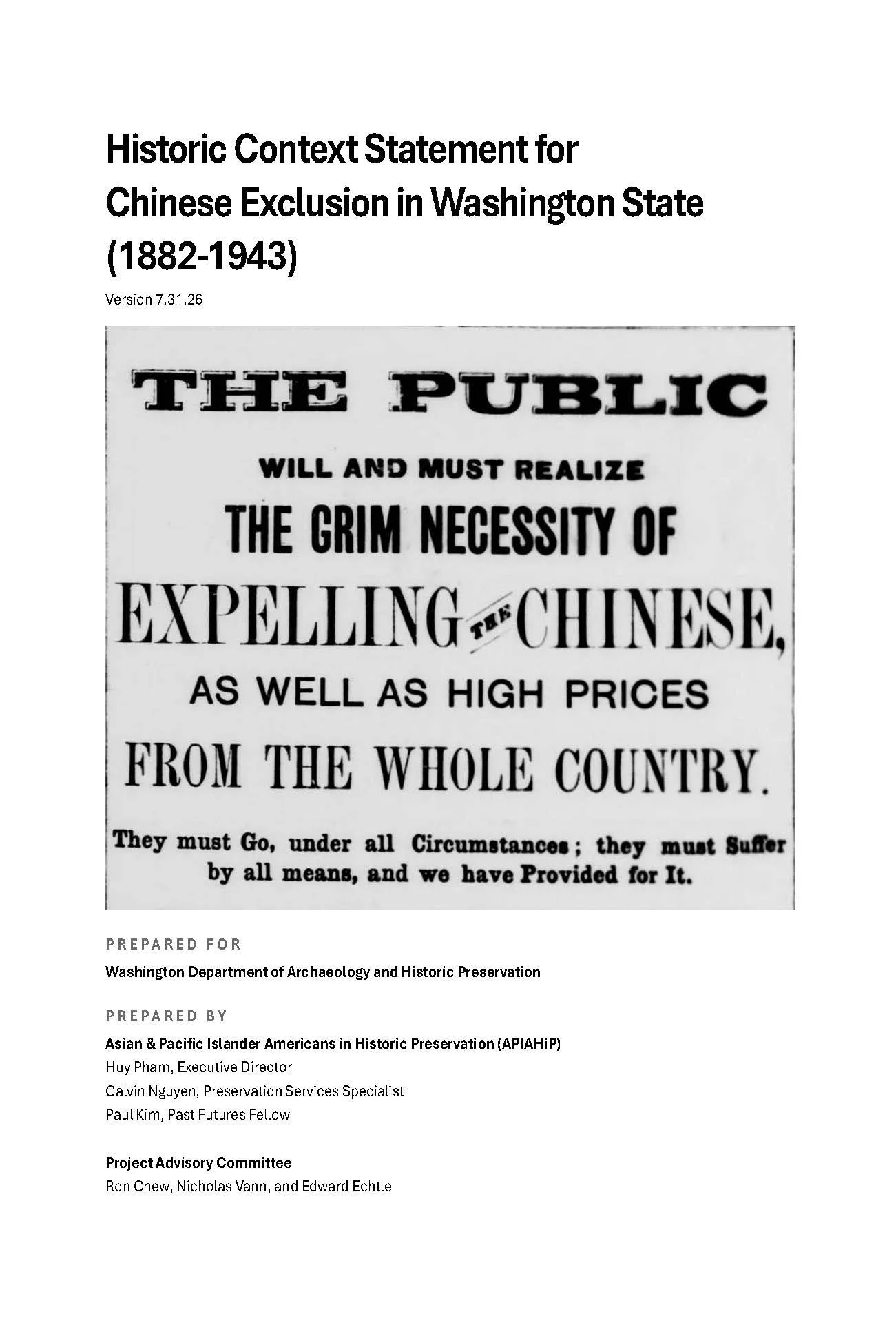
As the principal goal of this project, APIAHiP developed a historic context statement for Chinese Exclusion in Washington. The document covers the history of the Chinese Exclusion Era (1882-1942) and highlights the different types of historic sites associated with it. From violent expulsions of entire Chinese communities to the formation of Seattle’s Chinatown, the document provides a foundation to understand this history in place.
The historic context statement will support future historic designation and documentation efforts related to Chinese Exclusion in Washington. It may also serve as an example for similar efforts in other regions and states.
ENG HOUSE NATIONAL REGISTER NOMINATION
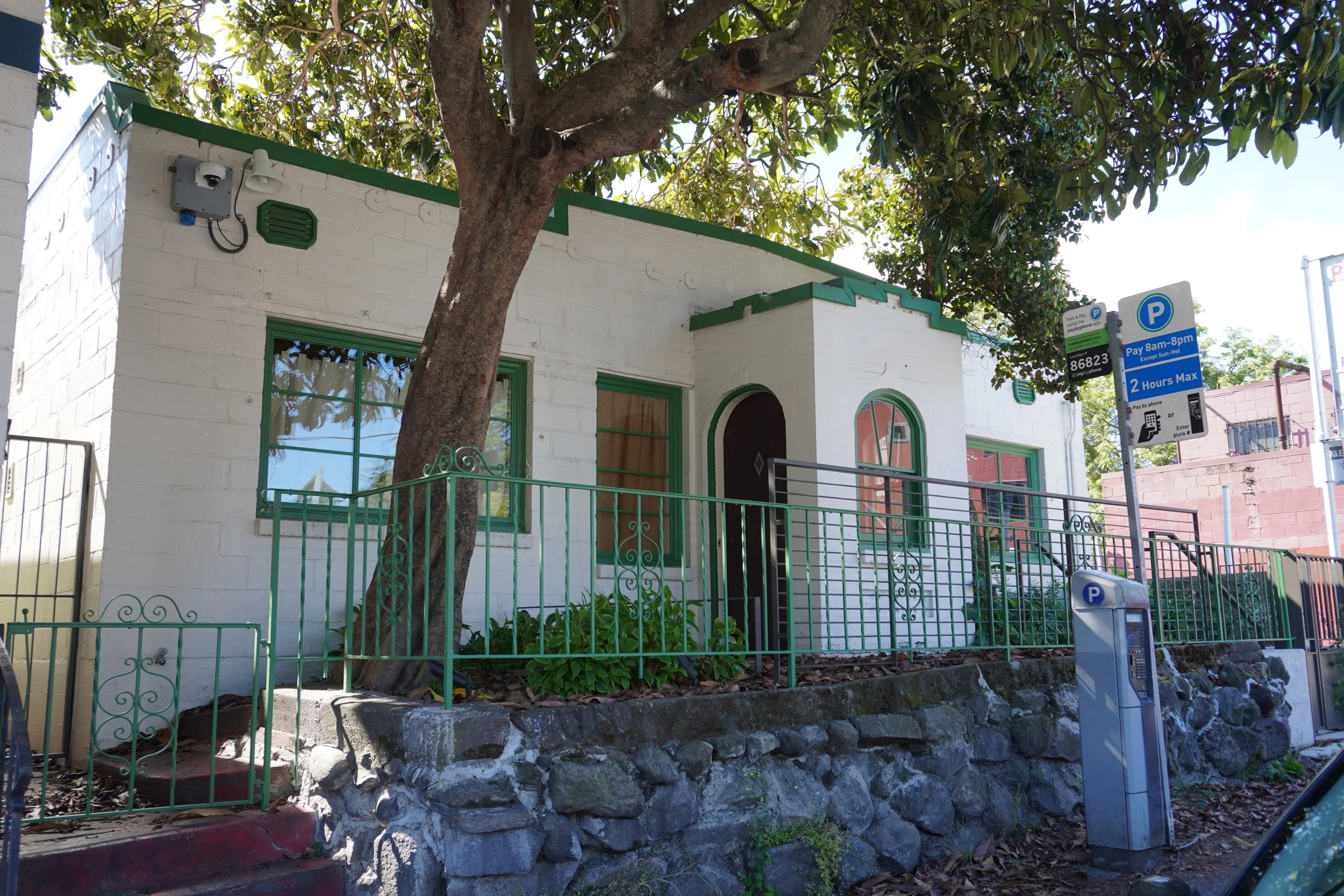
As part of the historic context statement work, APIAHiP also successfully designated the Suen King and Sue Fong Eng House on the National Register of Historic Places. The house, built in 1937, was constructed and owned by Chinese immigrants Suen King and Sue Fong Eng and inhabited by their family for decades. The house, which is one of the last remaining single-family residential houses in Seattle’s Chinatown-International District, stands as a testament to the family’s perseverance through the Chinese Exclusion Era, when Chinese immigrants were prohibited from owning property.
Most recently, the Wing Luke Museum has rehabilitated and adaptively reused the Eng House as exhibition space to interpret the Eng family’s contributions to the neighborhood and the history of the Chinatown-International District more broadly.
STATE HISTORIC PROPERTY INVENTORY FORMS
The final component of the project included submitting fifteen Historic Property Inventory Forms (HPIFs) for the Washington Information System for Architectural and Archaeological Records Data (WISAARD). These submissions help further inform planning and preservation decisions across the state, and serve to better ensure that the history of Chinese Exclusion in the state and its associated sites are considered.
Unlike traditional historic resource surveys, the entries for Chinese Exclusion Era sites cast a wide net, identifying sites that have been lost or memorialize significant events in place. This approach not only identifies sites that may have potential archaeological information related to Chinese settlement and exclusion, but better recognizes places related to a history marked by erasure, expulsion, and demolition.
in partnership with