

APIA Every Day is our commitment to learning and sharing about historic places significant to Asian & Pacific Islander Americans, every day.
Follow Us →

Day 84: Filipino Christian Church, Los Angeles, California
📌APIA Every Day (84) - The Filipino Christian Church, located in Los Angeles, California, was established in 1950. Initially, it consisted of a group of young Filipino male students enrolled at the California Christian College, who founded the group in 1928 under the name "Filipino Christian Fellowship." They were the first religious group formed for the earliest Filipino immigrants. In 1933, the Fellowship reorganized as a formal church, relocating from place to place, including Little Manila, Bunker Hill, and Temple-Figueroa, due to city redevelopment projects that demolished various neighborhoods in L.A. The church finally acquired the former Union Avenue M.S. Church in the Temple-Beverly corridor as its permanent location. The establishment of this church led other Filipino organizations and institutions to relocate to the area, now known as Historic Filipinotown.
The Filipino Christian Church served various purposes, becoming a receiving ground of sorts. For those without a place to stay, it became a temporary home until permanent housing arrangements could be made. Additionally, it served as a place for newly arriving Filipinos to congregate and socialize with other Filipino residents.
Since its construction, the Filipino Christian Church has played a vital role in the civic and cultural advancement of the Filipino community in Los Angeles. It was the birthplace of the earliest Filipino American organizations in the U.S., such as the Filipino American Community of Los Angeles. It also established the local chapter of the Filipino American National Historical Society and served as a place to gather and learn for the Filipino Cultural School.
The Filipino Christian Church became a safe haven for Filipinos arriving and residing in the Los Angeles area. It acted as a social and community hub to uplift the Filipino American community and provide safety during times when the Filipino community faced racism from local LA residents. The church was listed on the National Register of Historic Places in 2019.

Day 83: Jerome War Relocation Center (Concentration Camp), Drew, Arkansas
📌APIA Every Day (83) - The Jerome Relocation Center, located in Drew County, Arkansas, was the last of the 10 Japanese incarceration camps to open and the first to close. Operating from October 6, 1942, until June 20, 1944, it reached its peak population at nearly 8,500. The majority of the Japanese imprisoned had previously resided in Los Angeles, Fresno, Sacramento, and Hawai’i, with 66% being American citizens.
Situated eight miles south of the small farming town of Dermott in Chicot County, the camp was connected by rail to the Rohwer Relocation Center in Desha County via the Missouri Pacific Railway system. The entire Jerome site encompassed 10,054 acres situated between the Big and Crooked Bayous. Residential buildings lacked plumbing or running water and relied on wood stoves for heating during the winter months. The camp was partially surrounded by barbed wire or heavily wooded areas, with guard towers strategically placed and manned by a small contingent of military personnel.
Due to its small size, incarcerated Japanese Americans lived in dense quarters, leading to an influenza outbreak in January 1944. Tensions rose due to disputes with administration over working conditions, exacerbated by the death of an inmate in an on-the-job accident. From November 1942 to October 1943, incarcerated Japanese Americans went on strike multiple times.
Jerome was the first of the ten relocation camps to close, later serving as a German prisoner-of-war camp until the end of World War II. Today, only a granite monument remains at the former site of the Jerome concentration camp. An internment camp museum opened in McGehee, Desha County, in 2013, and the camp was listed on the Arkansas Register of Historic Places on August 10, 2010. While little physical evidence of the camp remains, the struggles and difficulties faced by the Japanese at the Jerome incarceration camp are remembered.
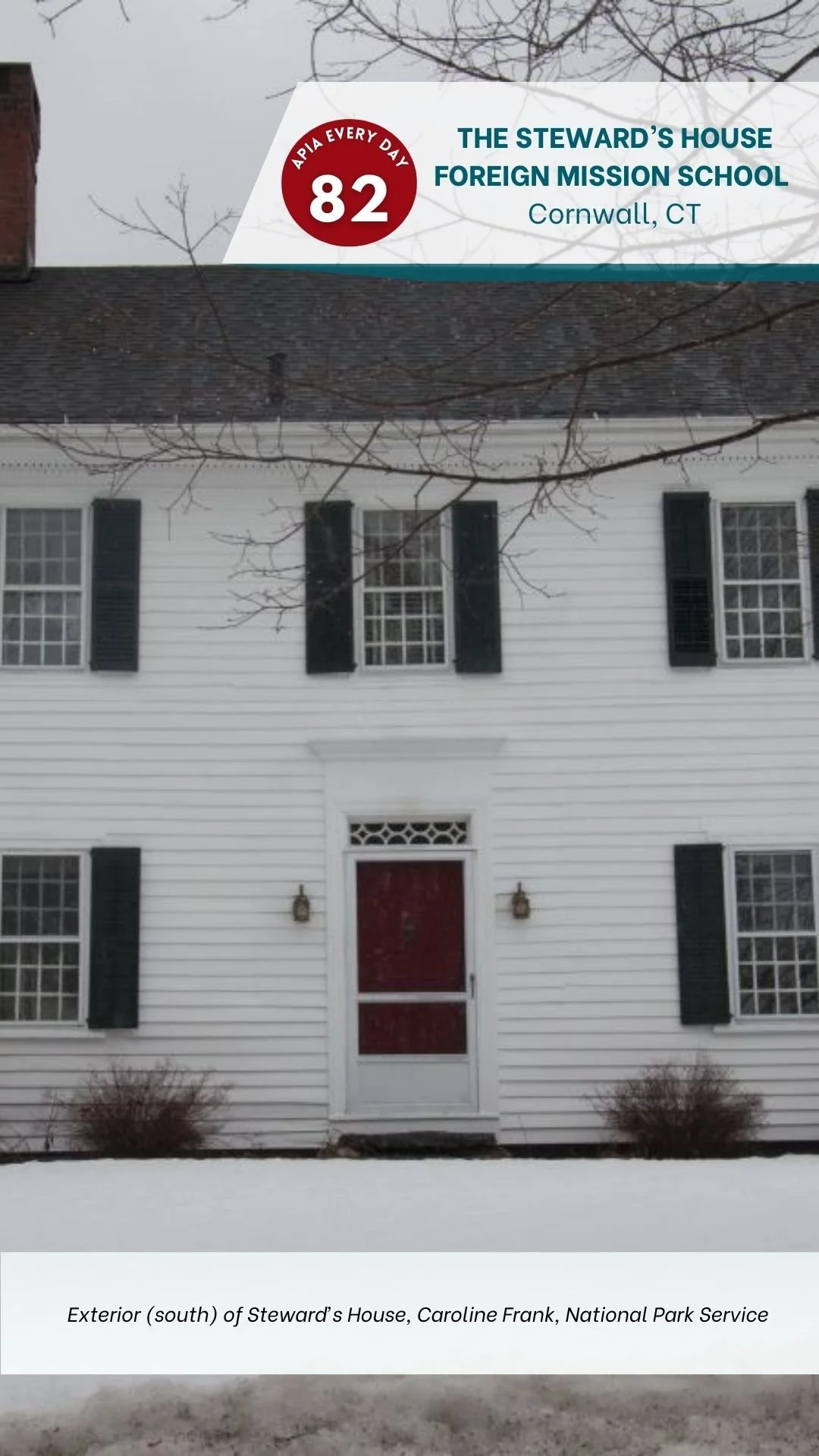
Day 82: Steward's House-Foreign Mission School, Cornwall, Connecticut
📌APIA Every Day (82) - The Foreign Mission School (FMS) in Cornwall, Connecticut, operated from 1817 to 1826, marking the first domestically located foreign mission school in the US. Its goal was to convert students to Christianity and propagate Protestant values, particularly in the Asia-Pacific Island region, while simultaneously training them as preachers, healthcare workers, translators, and teachers within their respective communities. The FMS student body totaled over 100 individuals, including Hawaiians, Chinese, Jews, Malays, Bengalese, and Hindus, as well as fourteen American Indian Nations.
The school was established when its first student, Hawaiian refugee Heneri Opukaha’ia, interacted with Edwin Dwight, son of Yale president Timothy Dwight, leading to the formation of the institution in 1817. In its first year of opening, it hosted Hawaiian, Chinese, Hindu, Bengali, and Native American students, among others. Students received education across various subjects alongside practical skills like coopering and blacksmithing. However, the presence of non-Christian people of color sparked concern among local residents, fearing miscegenation.
Two interracial marriages involving Foreign Mission School students—John Ridge, a Cherokee, with Sarah Northrop, and Elias Boudinot with local girl Harriet Gold—met vehement opposition from the community, resulting in public displays of anger and threats. The backlash ultimately led to pressure on the school to close. Additionally, concerns from families regarding the impact of the New England climate on their children's health, exacerbated by the "climate-related" deaths of Pacific Islanders, contributed to the decision by the American Board of Commissioners for Foreign Missions to shut down the school in 1826.
In 2016, the Steward’s House, one of the few surviving buildings from the FMS era, received designation as a National Historic Landmark by the National Park Service. This designation serves to highlight the history of Asian and Pacific Islander students who faced racial adversity from the Cornwall community during the 19th century.

Day 81: Stedman-Thomas Historic District, Ketchikan, Alaska
📌APIA Every Day (81) - The Stedman-Thomas Historic District, situated in Ketchikan, Alaska, served as a hub for several Asian American and Pacific Islander groups from the early 1900s to the 1940s. Initially, both Tlingit Native Americans and White settlers inhabited Ketchikan. However, as the fishing industry in the Pacific-Northwest expanded, diverse ethnic groups began migrating to Alaska. Chinese, Japanese, Korean, Hispanic, African Americans, and Alaskan Native Americans settled in a part of Ketchikan known as "Indian Town" as segregation took hold, with the North side catering to White settlers and the South side becoming home to non-white populations. This settlement allowed Asian businesses to thrive along Stedman Street, meeting the needs of the fishing community.
The onset of World War I created a demand for seafood, transforming Ketchikan into a prosperous fishing hub. Consequently, Indian Town expanded, evolving into a self-contained community to meet the rising demand. It was during this period that restrictions on Japanese and Chinese immigrants became stricter, prompting Filipinos to migrate North to work in the Alaska canneries. This migration marked the earliest settlement of Filipinos in Alaska. As more Filipinos began to migrate, a Filipino Social Club, later becoming the Filipino Community Club in 1938, took place in a building on Stedman St. Compared to the other ethnic groups residing in Ketchikan, Filipino-Alaskans, known as Alaskeros, have previously played a significant role in the district's history. While their presence in Alaska dates back to the early explorers, it wasn't until the 20th century that many settled in the region. Initially working seasonally in Alaska's salmon industry, by 1950, Ketchikan had become home to most Filipino-Alaskans. When World War II started, the evacuation of Japanese residents to incarceration camps disrupted the community. Japanese residents were forcefully removed to the Minidoka Concentration Camp [APIA Day 32], shrinking available labor in the area. As a result, the harbor intensified Indian Town's role in supporting the industry.
Currently, the district features 47 buildings reflecting its early 20th-century character, and today it remains a thriving commercial and arts neighborhood reminiscent of its fishing community origins. Ketchikan was listed on the National Register of Historic Places in the 1990s. While some of the historic structures no longer exist in the area, the ethnic communities continue to reside in the area, especially the Filipino community.

Day 80: Anandi Gopal Joshi, Women’s Medical College, Philadelphia, Pennsylvania
📌APIA Every Day (80) - Anandi Gopal Joshi was the first Indian woman to become a doctor, earning her degree at the Women’s Medical College of Pennsylvania (WMCP) in Philadelphia. Established in 1850, the WMCP provided women from diverse backgrounds educational opportunities in the medical field. Joshi, along with Keiko Okami and Sabat Islambouli, were the earliest licensed female physicians in their respective countries: India, Japan, and Syria. Moreover, Joshi's enrollment at WMCP defied norms both in India, where educating women was discouraged, and in the United States, where women's education was still limited.
Born on March 31, 1865, in Maharashtra, India, Joshi's early life was marked by tragedy with the loss of her child due to limited medical care, resulting in her interest in medicine. Her husband, Gopalrao Joshi, encouraged her educational journey by teaching her various subjects and facilitating her studies in Calcutta to avoid familial interference. Motivated by a desire to address the lack of medical services available to women, Joshi journeyed to America to pursue medical education at WMCP. Graduating at the age of 19 on March 11, 1886, she was praised by prominent figures like Kesari editor Lokmanya Tilak and Queen Victoria, who extended congratulations and financial support.
Upon her return to India in 1886, she was appointed as a physician at the Albert Edward Hospital in Kolhapur. However, her career was tragically cut short by tuberculosis, and she passed away at the age of 21 on February 26, 1887. Islambouli and Okami also encountered obstacles in their professional journeys, with Islambouli's career fading into obscurity and Okami facing gender discrimination. Despite their challenges, their legacy remains significant, especially as women now outnumber men in medical schools worldwide.
Anandi's life inspired numerous works, including the first biography by Caroline Wells Healey Dall in 1888, a Hindi serial titled "Anandi Gopal," and a Marathi novel by Shrikrishna Janardan Joshi. She is commemorated through various honors, including the Anandibai Joshi Award for Medicine and a crater on Venus named after her.
The WMCP, now Drexel University College of Medicine, is commemorated by a historical plaque at 6th and Arch streets in Center City. The plaque acknowledges the institution's role as a training ground for numerous practitioners, including international medical missionaries. Joshi's narrative is also featured in the South Asian history tours organized by the South Asian American Digital Archive (SAADA), providing insights into the intersection of gender, education, and medicine in the 19th century. The experiences of Anandi Gopal Joshi, Keiko Okami, and Sabat Islambouli offer insights to approaching adjacent place-based historic preservation practices.

Day 79: Joe Gow Nue & Co., Greenville, Mississippi
📌APIA Every Day (79) - Joe Gow Nue & Co., one of the first Chinese-owned grocery stores in the Delta region of Greenville, Mississippi, was situated at the end of 200 Washington Avenue, on the corner of North Walnut Street. The store played a crucial role in serving both Chinese and African American customers during the peak of racial segregation in the South. Being one of the few Chinese grocery stores in the area offering local Chinese food, it became a popular community center. Moreover, the store provided additional services for its Chinese community members, including assistance with immigration forms, passport applications, and ticket purchasing to cities such as New York, Seattle, San Francisco, and New Orleans.
Although there is no information on when or how Joe Gow Nue, the Chinese owner of the store, arrived in Mississippi, it is mentioned that Nue was a native of Wang Sek village in China's Guangdong province. Around 1910, Nue retired and returned to China, selling his grocery store to two brothers, Joe Nam and Joe King, who had previously operated a laundromat in Holyoke, Massachusetts. The grocery continued to be managed by other family members, and in 1947, Joe Ting, the third brother of Nam and King, and additional relatives ran the grocery store for another five decades.
The existence of a Chinese grocery store in the Deep South provided a valuable service that benefited Chinese American, African American, and White populations. Chinese business owners purchased goods from White wholesalers and then sold those goods to Black patrons. This arrangement was prevalent throughout the Mississippi Delta and similar interactions occurred in Arkansas and Texas. The popularity of the store led to the opening of another grocery named "Joe Gow Nue Co. No. 2." However, the store eventually closed in the 1990s, with the remains of the historic structure destroyed by a fire in 1998. Today, the site that once housed Joe Gow Nue Co. is now a grassy lot.

Day 78: Philippine Village, St. Louis, Missouri
📌APIA Every Day (78) - Philippine Village, located in Missouri, spanned 40 acres and served as a human exhibit, displaying around 1200 Filipinos and Indigenous peoples during the 1904 World's Fair in St. Louis. This abhorrent attraction featured various indigenous tribes, including Igorots, Moros, Bagobos, Aetas, Mangyans, Visayans, and Tagalogs, alongside 700 Filipino soldiers as exotic commodities. This human zoo was labeled an "ethnographic exhibition" by fair organizers, presenting segregated tribes in structures replicating the Philippines. Filipino workers constructed these displays, observed by white patrons who paid 25 cents to witness the "primitive" civilization in its supposedly "natural state." The fair primarily functioned as propaganda to secure American support for the colonization of the Philippines, a territory acquired by the U.S. in 1898 following the Spanish-American War. The portrayal of Filipinos as "primitive" and unfit for self-rule aimed to justify the U.S. takeover for "their own good." Due to harsh conditions and unfamiliarity with the cold Midwestern weather, many Filipinos, including teenagers, died from pneumonia, turning their suffering into part of the spectacle.
For past decade, artist and researcher Janna Añonuevo Langholz has spearheaded efforts in preserving the histories of those Filipinos and Indigenous peoples. Using newspaper archives and burial records, she documented the lives of nearly 200 Philippine Village residents, addressing the long-neglected history in St. Louis. Langholz located the unmarked graves of five individuals in Calvary Cemetery and emphasizes the exploitation and lack of recognition for this historical site, advocating for a permanent memorial. Additionally, she uncovered the disturbing case of Maura, whose body may have been donated for anthropological research after being displayed at the fair.
Langholz now conducts guided walks at the former 40-acre Philippine Village site, including the Demun and Wydown neighborhoods in Clayton, near Forest Park, MO. She carries with her the "Philippine Village Historical Site" sign as a living monument that holds space for respectful engagement with the aftermath of the 1904 World’s Fair and the accurate telling of history with the perspectives of Filipinos and Indigenous people at the forefront.

Day 77: Atauloma Girls School, Tutuila, American Samoa
📌APIA Every Day (77) - Atauloma Girls School, established in 1900, stood as the second secondary school and the first for girls in American Samoa. Housed within a two-story concrete building, it functioned as both a dormitory and a classroom facility, training girls to become pastors' wives or nurses. The school played a pivotal role in transmitting Samoan culture and integrating Christianity into the education system.
The disruption of close family ties, stemming from the prolonged absences of girls attending schools in Western Samoa, and concerns about their safety amidst the escalating international rivalry, prompted the establishment of Atauloma Girls School in Tutuila in 1900. The school aimed to provide education to girls, especially those considered potential pastors' wives and daughters of higher chiefs.
Prior to the 1900s, formal education in Samoa was scarce, primarily relying on village parochial schools run by pastors from other Polynesian islands. The London Missionary Society (LMS) had substantial influence on education in Samoa, establishing village schools, secondary schools, and seminaries. Similar to other Samoan parochial schools, Atauloma Girls School centered on religious education but incorporated some secular subjects. Boys delved into Western manual arts, while girls received instruction in hygiene and domestic arts. The school played a role in supplying pastors and missionaries not only for Samoa but also for other Pacific islands. The curriculum at Atauloma in 1926 included subjects taught in the Samoan language, including reading, writing, arithmetic, scripture, geography, English, drawing, sewing, singing, housekeeping, and cooking. The school employed a non-Samoan staff, comprising missionaries and Samoan junior teachers.
Today, the school lies abandoned, shrouded by the jungle, and is believed to have a guardian spirit overseeing the area. The rest of the history and details of the school are thought to be within the archives of Malua College in Western Samoa, prompting further research by a Samoan-speaking historian.

Day 76: Katherine Wai, Otterbein College, Westerville, Ohio
📌APIA Every Day (76) - Katherine Wai was the first Chinese woman to graduate from Otterbein College in 1918. Born in 1884 in Guangdong Province, South China, Katherine Wei was first documented in a 1910 census entry as a 16-year-old Chinese woman lodging with a white family on Lincoln Street. Regina Bigler, a medical missionary in the ancient city of Guangzhou, fostered Jan Wah Way (Katherine Wai) upon discovering that Wai's father had sold her into slavery to settle his debts.
In 1909, Bigler and Wai journeyed to Hong Kong, boarding a ship to America. Upon reaching the mainland, Wai informed immigration officials that Bigler had covered her passage, seeking exemption from Chinese Exclusion Act restrictions. Additionally, she indicated Westerville as her final destination, implying her intention to become an Otterbein student. This arrangement was likely facilitated due to Bigler's affiliation with the United Brethren church, associated with the college.
Katherine Wai resided with the Gantz family and entered a college preparatory program at Otterbein, later becoming a full-time student until her graduation in 1918. During her time at Otterbein, Wai encountered language and financial barriers, alongside racist remarks from her peers. Post-graduation, she returned to China, married John Siew, and started a family. Although newspaper clippings briefly mention her as a teacher, limited information is available about Wai's life after graduation. However, insights into her experience migrating to America and attending Otterbein provide a unique perspective on the life of a Chinese woman during the Chinese Exclusion period. How can we look explore the life story of Katherine Wai through a place-based historic preservation lens?

Day 75: Watt Munisotaram, Hampton, Minnesota
📌APIA Every Day (75) - The Watt Munisotaram, located in Hampton, Minnesota, was established in response to the influx of Cambodian refugees in Minnesota in the mid-1970s. As the need for a Cambodian Buddhist monastery arose, the Minnesota Cambodian Buddhist Society, Inc. (MCBS), a non-profit organization, addressed the need in 1982. Led by Mrs. Kan Sally, the community reached out to Venerable Ung Mean from the Buddhist monastery in Washington D.C., requesting a monk to lead the formation of a monastery in Minneapolis.
Under Venerable Son Chey Sothy's leadership from 1982 to 1986, preparations began, and a house in Minneapolis served as a temporary worship place and residence for the monk. In 1985, with support from the Cambodian community, MCBS purchased a house in Eagan, marking the start of the Cambodian Buddhist monastery. With the desire for a more permanent location, Venerable Thach Son, the second abbot, led efforts to purchase a 40-acre farmland in Hampton in 1988.
The farmland initially had a small house and two barns. A new bank loan resulted in the expansion of the house to serve as a residence for monks and a temporary temple. Under the leadership of Venerable Sang Moeng since 1998, plans for a permanent temple took shape between 2000 and 2001, with construction completed in 2007. Continuing their efforts, MCBS initiated the construction of the Sakyakmuni Stupa in 2010 to enshrine the holy relics of the Buddha. This ongoing project includes a base covering 3,600 square feet and three levels, symbolizing different aspects of Buddhist philosophy.
The Watt Munisotaram continues to undergo renovations and additional features to meet the needs of the local Cambodian community and serves as a sacred place to practice Buddhist traditions.

Day 74: Ah Toy Garden, Warren, Idaho
📌APIA Every Day (74) - The Ah Toy Garden, located 10.5 miles from central Idaho's Warren Mining District on China Mountain, spans approximately 3 acres and stands out as one of the most complex and remote among the three Chinese terraced gardens. Preserving historical attributes from the late 1880s to 1920, the site offers a view of the South Fork of the Salmon River. Until around 1910, the garden functioned as food source for the Chinese community to grow vegetables and fruits so that traditional diets could be maintained while community members worked the mines. The garden produced a variety of vegetables, strawberries, grapes, and rhubarb for commercial sale.
The site features remnants of the Old China Trail, rock cairns, and an irrigation system. In 1988, the excavated reconstructed dugout revealed artifacts left behind by Chinese immigrants, including metal hoe blades, opium pipe fragments, and Chinese ceramics. These artifacts hold historical importance, providing insights into the presence of Chinese immigrants in the Idaho mining district.
While there is limited information available about the site, ongoing reconstruction and preservation plans outlined by the Payette National Forest present an opportunity for more extensive academic research and interpretive exhibits. The Ah Toy Garden preserves remnants of Chinese immigrant communities in the American Northwest, contributing to a deeper understanding of Chinese immigrant history from the late 19th to the early 20th century. The site was officially listed on the National Register of Historic Places on June 27, 1990.

Day 73: Walnut Grove, Sacramento, California
📌APIA Every Day (73) - The Walnut Grove Japanese-American Historic District in the Sacramento-San Joaquin Delta was shaped by the contributions of both Chinese and Japanese Americans. In the late 1800s, Chinese immigrants developed the district, but Chinese exclusionary laws led to a decline in their residency and an increase in Japanese immigration. By 1896, Walnut Grove saw the establishment of the first Japanese-owned business, marking the inception of Kawashimo, meaning “downriver”, a name given to the town based on the Japanese immigrants travel to the area.
A fire in 1915 disrupted Walnut Grove's Japantown, leading to the rebuilding of Kawashimo in 1916. Throughout the 1920s and 1930s, Kawashimo thrived as a community for Japanese residents, with its commercial district serving over 100 families. However, World War II brought a significant transformation, with Executive Order 9066 leading to the evacuation of Japanese Americans and the district's occupation by Filipinos and Mexican laborers. Post-war, some residents returned, but many travelled to nearby cities for other opportunities. Despite losing three buildings to war-related fires, the district retained its architectural accuracy from the 1920s. Businesses like Kawamura Barber Shop and Hayashi Market persisted under original family ownership as of 1990.
Today, the Walnut Grove Japanese-American Historic District stands as a rare example of a Japanese American community designed and built by Japanese immigrants during this time period. Reflecting Asian preferences, the architectural style remains true to the 1920s, serving as a marker of the historical events on immigrant communities in California. Recognized as a National Register historic district in 1990, it encompasses both the commercial core and the "backtown" area, east of the Southern Pacific railroad tracks, contributing to the rich historical tapestry of the community.

Day 72: Tollai Talaifak, Agat, Guam
📌APIA Every Day (72) - The Taleyfac (Talaifak) Bridge, also known as Taleyfac Spanish Bridge or Talaifak Tollai Acho’, is a historic stone arch bridge located in Agat, Guam. Constructed in 1785 under Spanish Governor Felipe de Cerain’s administration, the wooden bridge was part of the bridges built in the southwestern part of Guam, connecting the capital Hagåtña to the island’s main port, Humåtak, via El Camino Real or the Royal Road.
Over time, deterioration prompted Governor Felipe de la Corte’s administration in the 1850s to advocate for reconstruction with stone bridges, including the one over the Taleyfac River. Throughout the years, one arch suffered damage due to stone removal or erosion. By 1917, certain segments of the original road of the Royal Road were still in use, but the Spanish bridges, including Taleyfac Bridge, had fallen into disuse.
In 1974, the bridge was listed on the National Register of Historic Places and Guam Register of Historic Sites. Subsequently, in 2013, the Guam Preservation Trust completed the restoration of Tollai Talaifak, addressing erosion along the river and incorporating parking facilities and educational signage chronicling the bridge's history. The efforts to restore the bridge have contributed to Guam’s architectural and cultural history, providing insight into different historical periods on the island.
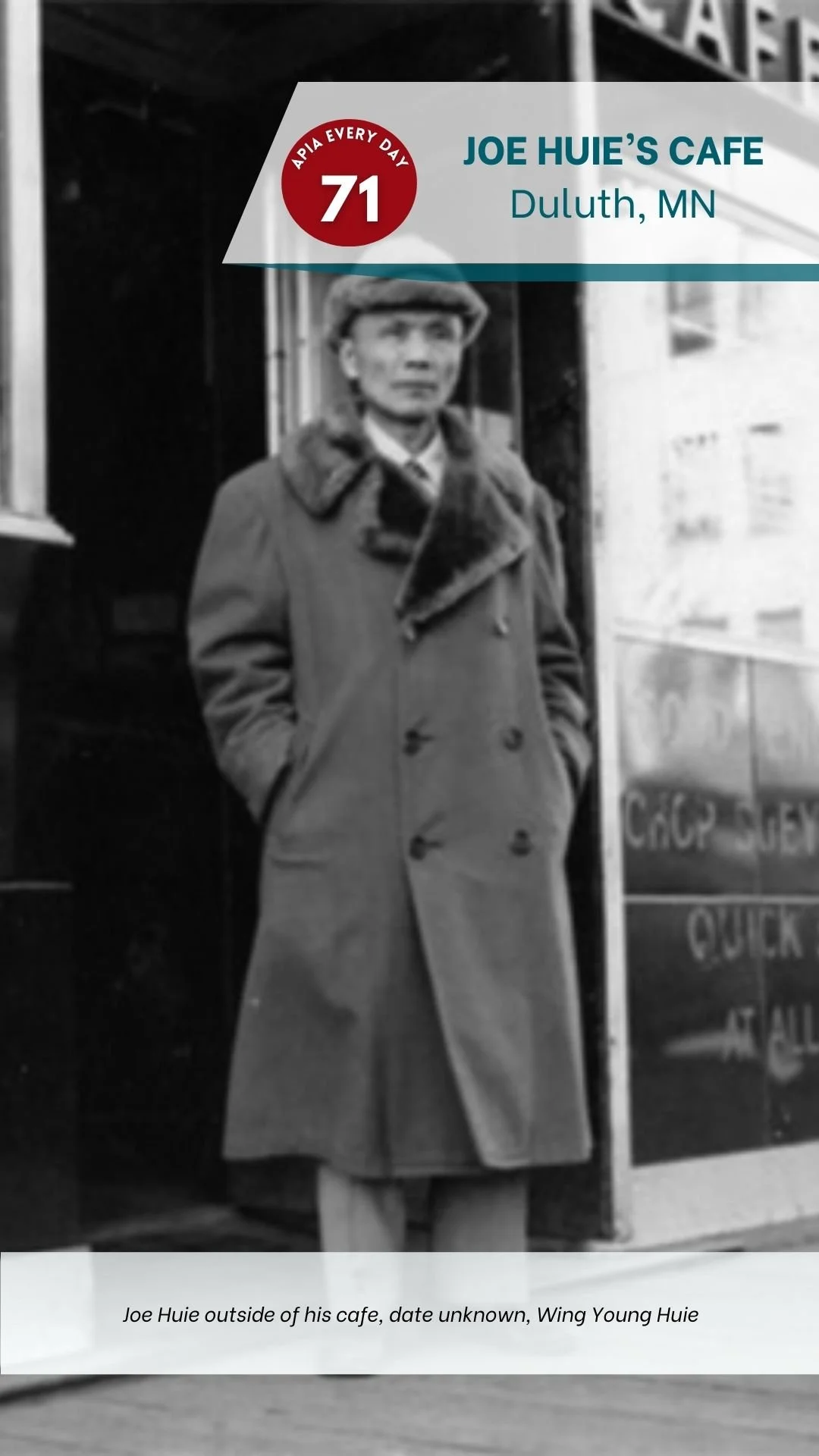
Day 71: Joe Huie’s Café, Duluth, Minnesota
📌APIA Every Day (71) - Joe Huie’s Café, situated in Duluth, Minnesota, operated from 1951 to 1973, leaving a lasting impact on the community. Owned by Chinese immigrant Joe Huie, the restaurant served a menu of American Chinese and authentic Chinese dishes. Huie immigrated to Duluth from China’s Guangdong Province in 1925 to work for a relative who owned Duluth’s St. Paul Restaurant. Over the next 25 years, he traveled between Duluth and the Guangdong Province, finally settling in Duluth in 1951 with his two older sons. In that year, he opened his cafe, and two years later, the rest of his family joined him.
Known for its humor, such as the "OPEN 24 HOURS" sign due to a lost key, the café became a community hub. Despite its modest décor, it attracted a diverse clientele, and its late-night hours drew in customers after bar closures. Along with the restaurant’s popularity, Huie’s hard work ethic, shaped by his immigrant experience, made him a respected figure in Duluth. This reputation was furthered by his known generosity, as he often provided meals on credit or as handouts to those in need.
Joe Huie’s Cafe, located near the corner of Lake Avenue and Michigan Street, closed in 1973. Many community members mourned the loss of the popular diner, with sentiments expressed by notable figures like Jeno Paulucci and Police Chief Eli Miletich. The Huie family continued to open restaurants, such as the Chinese Lantern and Huie’s Chopstick. Unfortunately, Chinese Lantern caught fire on January 16, 1993. However, Huie’s Chopsticks on Fourth Street and Fifth Avenue East remained in operation until August 2022.
For the first time, the city of Duluth went without a Huie-owned restaurant; however, their contributions to the community continue to be remembered to this day.

Day 70: Huilua Fishpond, Oahu, Hawai’i
📌APIA Every Day (70) - Huilua Fishpond, situated in Kahana Bay on Oahu, is one of the six existing fishponds that still remains on the islands coast. The date of its construction is unknown, but typically ponds were built between 1200 and 1600 and were used for aquafarming practices. Hawaiians advanced from tide-dependent trapping to controlled fishponds, making their aquafarming the most advanced in the Pacific.
The fishpond had smaller pua ponds for raising fingerlings before releasing them into the larger pond, primarily for feeding and growth. A kia'i loko oversaw pond maintenance and fish care, with assistance from locals who received harvested fish in return. Huilua had religious significance, with stone shrines (ko'a) and rituals performed to attract fish. Legend spoke of mo'o, lizard-like water spirits protecting the pond.
Despite protection from waves, powerful tsunamis damaged Huilua in the 20th century, the worst being in 1946 when a tsunami hit the island, filling the pond with large amounts of sand and silt. Efforts to repair the pond included mortar, metal grates, and additional gates. However, a 1960 tsunami caused irreversible damage, leading to neglect, declining water quality, and structural decay. The Hawaii Division of State Parks began restoration in 1993, with the Friends of Kahana, an organization of Kahana residents, now leading the project.
Recognized as a National Historic Landmark, Huilua Fishpond stands illustrates early Hawaiian technological innovation, with the indigenous population being the first people to develop aquafarming in the Pacific. Located in Ahupua'a 'O Kahana State Park on Oahu, it continues to serve as a cultural and historical site.

Day 69 - Firefolk Arts, Waitsfield, Vermont
📌APIA Every Day (69) - Firefolk Arts, situated in Waitsfield, Vermont, proudly stands as the sole BIPOC-owned art gallery in the state, opening its doors on June 10, 2023. Founded by Tina Picz, a Filipina American artist, this 700-square-foot converted firehouse provides a platform for local artists and businesses to uplift and highlight underrepresented voices. Managed by Picz, along with her daughter and husband, the space includes various art projects, serving as an art space, gallery, and co-working studio.
Tina Picz, who relocated from Massachusetts to Vermont in 2020, was surprised by the lack of BIPOC or AAPI-owned art galleries in the area. Motivated by this, she founded Firefolk Arts to provide an art space for Vermont’s Asian American and Pacific Islander population, as well as for people of color in general. Situated in the majority-white town of Waitsfield, with only a 0.23% Asian American population, Firefolk Arts addresses the cultural and population gap by fostering inclusivity and representation.
As a relatively new BIPOC/AAPI art gallery, there is limited information available. However, Firefolk Arts has hosted several events in Vermont since its opening, featuring the work of ceramicists, photographers, illustrators, food vendors, and multimedia artists. How does the history and identity of AANHPI (Asian American, Native Hawaiian, and Pacific Islander) communities through art spaces transcend place-based preservation practices?
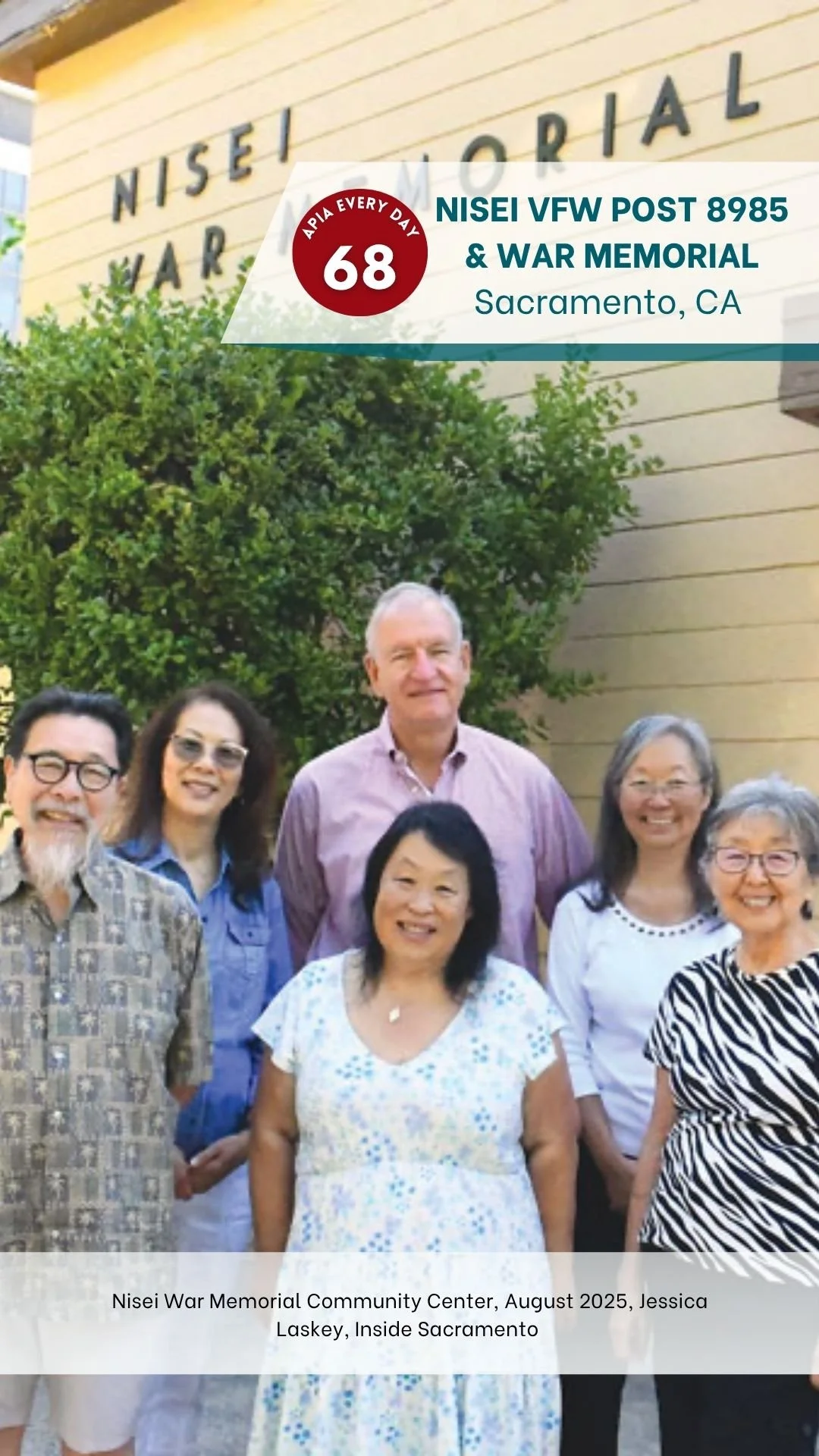
Day 68: Nisei VFW Post, Nisei War Memorial, Sacramento, California
📌APIA Every Day 68 - Located at 1515 Fourth Street in Sacramento, California, the post sits on the site of what was once Sacramento's Japantown. The post was chartered on February 7, 1947, by Japanese American veterans of the 442nd Regimental Combat Team and the Military Intelligence Service, who were barred from joining existing VFW posts due to racial exclusion policies. It was the first of 14 segregated Nisei VFW posts established in California, with the support of Alva J. Fleming, a VFW district leader who later became California's VFW state commander in 1957. The post initially met at the Sacramento Buddhist Church before acquiring its current building in 1955. That building — originally constructed in 1951 by African American entrepreneur Phelix Flowers as the Flower Garden restaurant, which also served as a banquet facility for an African American chapter of the Benevolent and Protective Order of Elks barred from the main Elks Tower — was purchased by the post with assistance from the local Japanese American Citizens League after Flowers declared bankruptcy in 1954. The post dedicated it as the Nisei War Memorial Hall, with an honor roll listing members killed during the war.
The building's context is directly tied to the erasure of Sacramento's Japantown. Before World War II, Sacramento's Japanese American community numbered over 8,000 residents and ranked fourth in size among Japantowns nationally. The mass incarceration of Japanese Americans under Executive Order 9066 in 1942 effectively dismantled the neighborhood. While some residents returned after the war, Sacramento's Japantown did not recover as Los Angeles's and San Francisco's did. In 1957, the Sacramento City Council voted to demolish the core of the neighborhood for what is now Capitol Mall. The Post 8985 building, newly constructed when redevelopment began, is the only remaining property from the former Japantown.
Post 8985 continues to operate as a nonprofit, veterans memorial, and community center. Its membership has expanded to serve the broader APIA community, and it sponsors a Boy Scout troop and other organizations. An exterior Japanese American civil liberties monument includes interpretive panels on Sacramento's Japantown and the wartime incarceration period. The property was nominated to the National Register of Historic Places in 2019 and received Sacramento landmark designation in 2021. An active restoration effort, led by Post 8985 and the Sacramento JACL, is currently underway: the first phase — ground-floor repairs including a new ceiling, roof, and electrical upgrades — is complete, and a second phase planned for 2026 aims to convert the upper floor into a museum for Nisei veteran artifacts and Japantown history, pending fundraising. Historical records donated by the post are also part of the Japanese American Archival Collection at Sacramento State University.
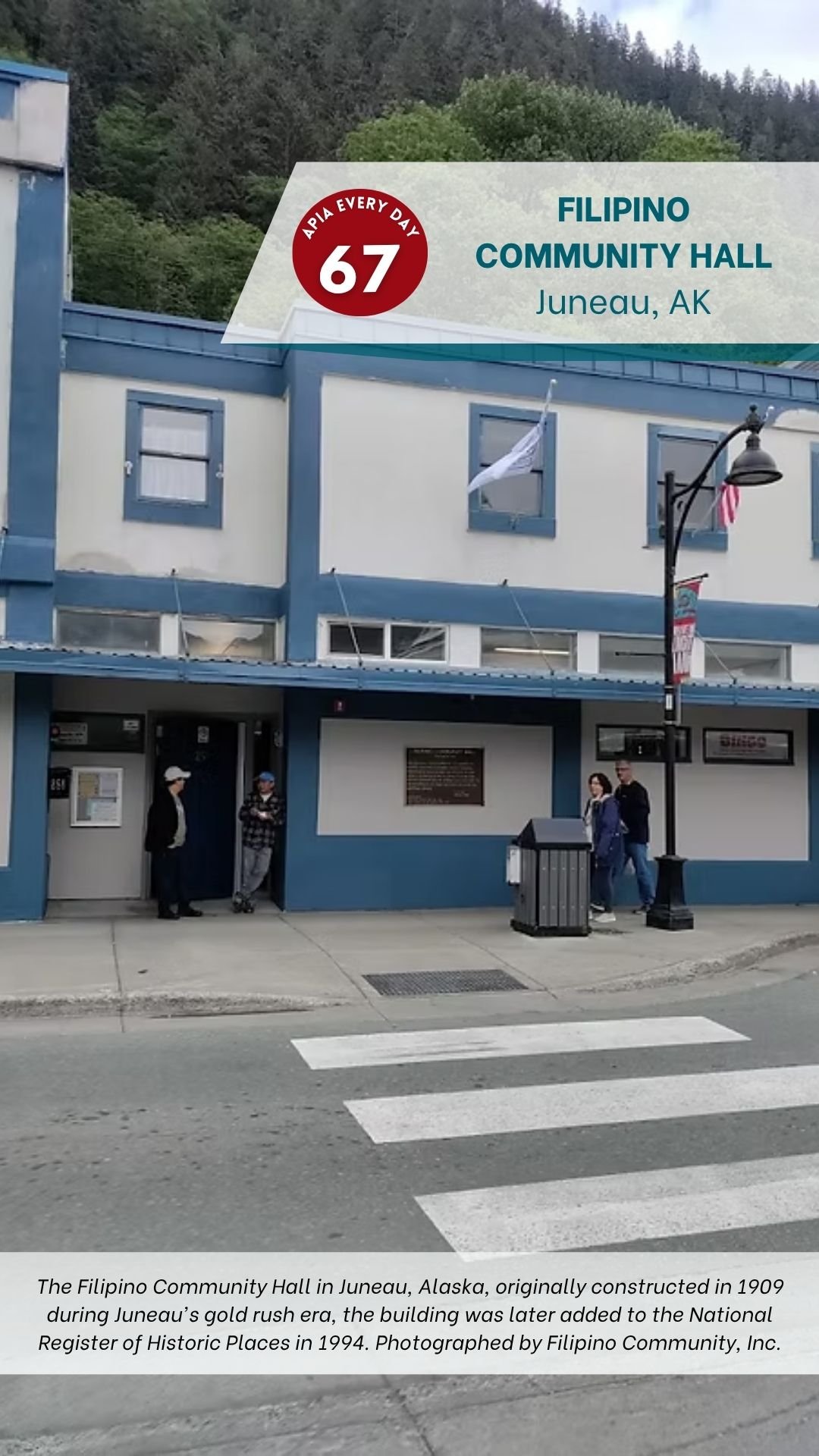
Day 67: Filipino Community Hall, Juneau, Alaska
📌APIA Every Day 67 - The Filipino Community Hall on South Franklin Street in downtown Juneau, Alaska has served as the organizational base for Filipino Community, Inc. (FILCOM) for over 50 years. Filipino presence in Juneau dates to the early twentieth century, when workers arrived as ore sorters at the Alaska-Juneau Gold Mine and as salmon cannery workers known as Alaskeros. Intermarriage between Filipino men and Tlingit women was common during this period, and those families formed the core of what became the organized Filipino community. Their original gathering space was a pool hall, which burned down in the 1960s. Filipino and Alaska Native community members raised funds together to acquire a replacement building on South Franklin Street. Filipino Community, Inc. was formally incorporated as a nonprofit in 1956; Tlingit wives of Filipino men were central to the fundraising effort, holding box socials and bake sales to purchase the new hall. The building was renovated in 1983 and is owned by FILCOM Inc., which also holds the community's historical assets.
The hall has functioned primarily as a space for social gatherings, cultural programming, and new-arrival support. Weekly bingo nights and holiday celebrations have been consistent programming throughout its history. During the early 2000s, Filipino Community, Inc. president Morris Carrillo oversaw the dedication of Manila Square, a nearby public space featuring a bust of Philippine national hero José Rizal. He and co-founder Ellery Lumbab also established Alitaptap, a folkloric dance troupe that reached nearly 100 performers at its peak and traveled throughout Alaska to perform, before becoming inactive in 2004. Current programming includes bingo nights, holiday gatherings, and recently resumed language and dance classes. Membership has declined in recent years, and the building requires ongoing maintenance.
In October 2023, FILCOM participated in Mga Kuwento ("the stories" in Tagalog), a history documentation project produced by KTOO public radio in partnership with the Juneau-Douglas City Museum and Filipino Community, Inc. The project included a podcast series, a museum exhibit, and a community celebration timed to Alaska's first official Filipino American History Month. Funding from the project supported new installations in the hall, including an interactive map of the Philippines and a curated display of historical objects. The hall is located on South Franklin Street in downtown Juneau.
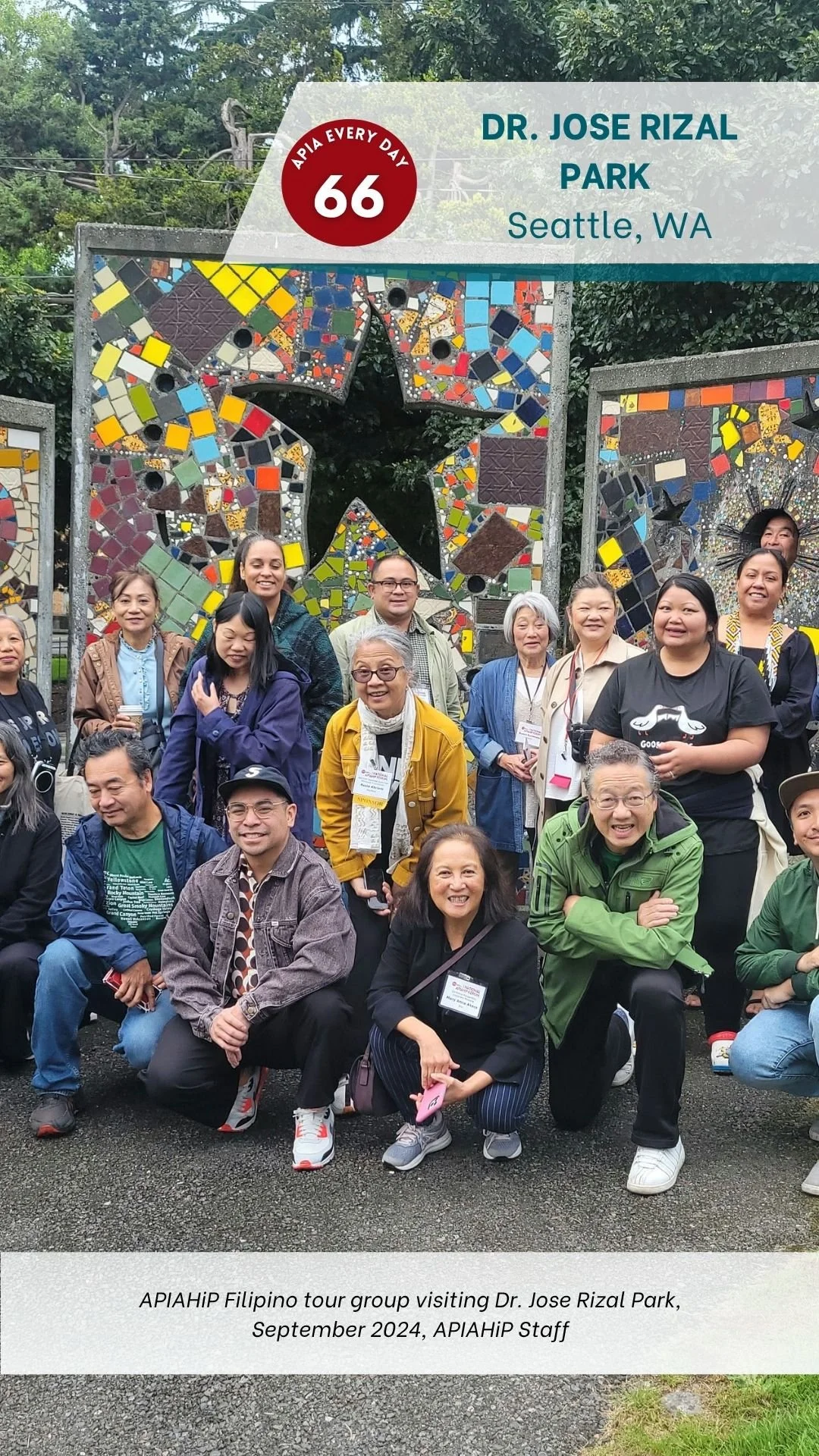
Day 66: Dr. José Rizal Park, Seattle, Washington
📌APIA Every Day 66 - Dr. José Rizal Park is a 9.6-acre public park on the north end of Beacon Hill in Seattle, Washington. The site, shaped by decades of city regrading projects and Interstate 5 and 90 construction, was transferred to the Seattle Parks and Recreation Department in 1971 and renamed from Golf Drive Park in 1974 at the request of the local Filipino community. A formal design by architect Elaine Day LaTourelle & Associates was funded through federal community development block grants secured in 1978, and construction was completed in 1981. The Development Committee, led by community members including Vic Bacho and Trinidad Rojo, was closely involved in the planning process throughout.
The park's designed gathering space along Twelfth Avenue South includes an amphitheater, covered picnic shelter, restroom, parking area, and a central mall. The "East is West" mural (1981) by Filipino American artist Val Laigo, a triptych of ceramic tile, art glass, and cut glass, depicts Philippine history on its east face and an abstract expressionist composition on its west face. A bronze bust of Dr. José Rizal by Filipino sculptor Anastacio Caedo was installed on a granite pedestal in 1989. Both the mural and the bust were funded through separate grant and community fundraising efforts.
The park was nominated to the National Register of Historic Places in 2024. It was listed under Criterion A for its association with the history of Seattle's Filipino American community, and under Criteria Consideration G as a property achieving significance within the past 50 years.

Day 65: Lanexang Village, New Iberia, Louisiana
📌APIA Every Day (65) - Situated in New Iberia, Louisiana, Lanexang Village is a thriving community, housing hundreds of Laotians and their families. Originally established as a refuge for Laotian refugees in the 1980s after the country's civil war, the village's name, loosely translated as '“million elephants,” reflects its cultural roots.
Sponsored by the Catholic Diocese in the 1970s and 80s, these refugees found work in Louisiana, including jobs like shrimp peeling and oyster shucking. In 1986, several dozen Laotian families collectively purchased land, leading to the establishment of Lanexang Village. Over the next decade, the community’s resident population grew to over 400 Laotians.
In 1987, Wat Thammarattanaram, a sacred temple, was constructed, serving as a place for Buddhist families to uphold their cultural and religious practices. The temple gained recognition, evolving into a popular tourist destination. Lanexang Village and Wat Thammarattanaram became the designated spots for hosting Songkran, the Laos New Year celebration, drawing large crowds, including those from outside the community.
Today, Lanexang Village thrives, with the younger generation actively engaged in preserving Laotian traditions. Initiatives such as temple tours and events organized by youth groups signify dedicated efforts to maintain a strong connection between the youth and their cultural heritage. Through these actions, the histories of Laos migration to Louisiana are preserved by the existence of Lanexang Village and Wat Thammarattanaram.